

The End of the Trail
Sculpture
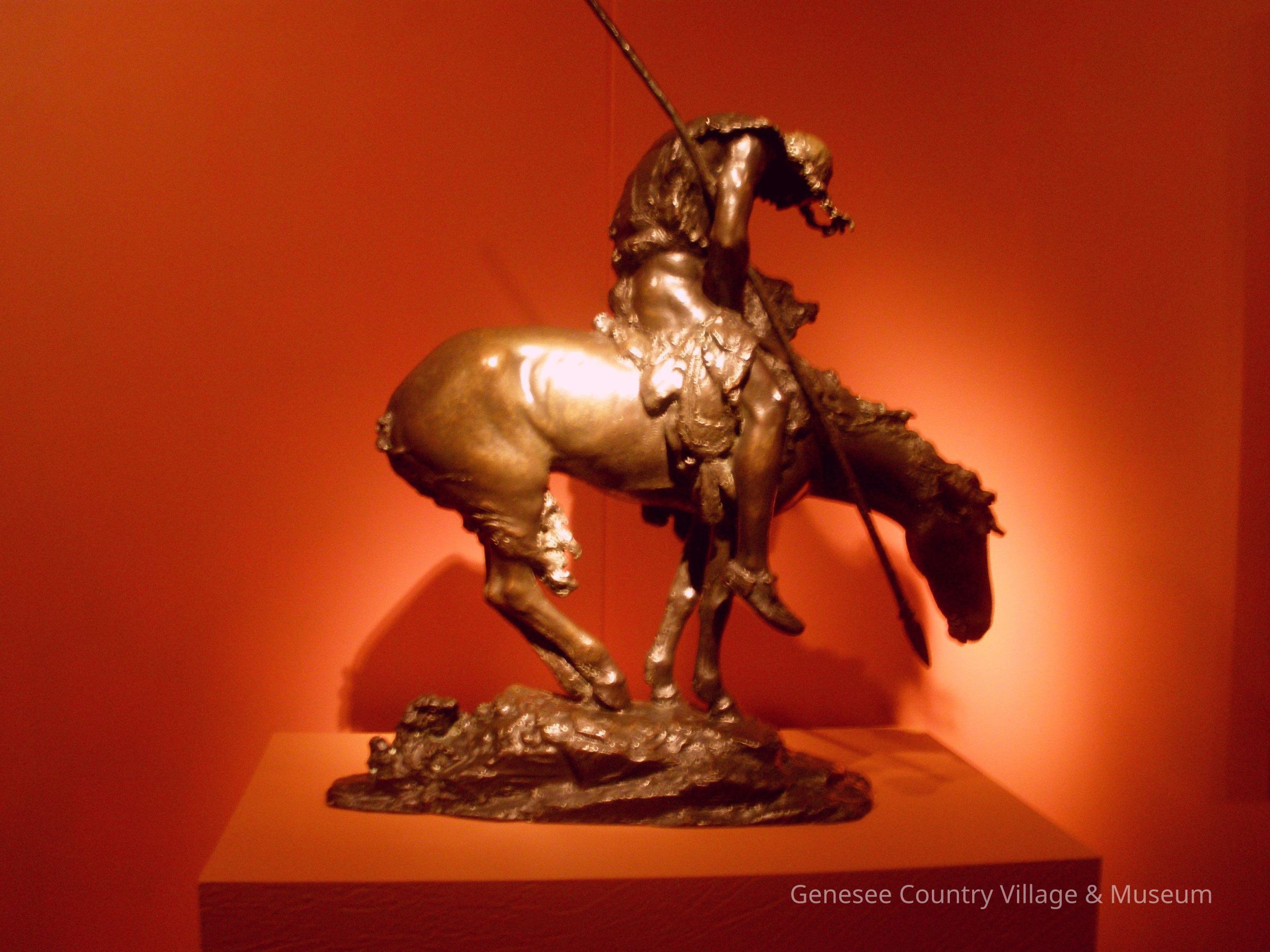
Oval base, roughly textured with rocky formation on which stands a horse with head lowered, ears drooping downward, mane falling forward. On horse's back is a realistic 3-D American Plains Indian wearing moccasins, loin cloth and buffalo robe. Upper body is bare, head droops forward, braids fall forward, blowing in the wind. Indian carries a lance in right hand. This is a later version of the 1894 work. The artist changed the braids and the mane in this version to suggest a strong wind blowing from behind. Slightly green patina.
220
Bronze
John L. Wehle Collection
Fraser, James Earle, 1876-1953
Roman Bronze Works Foundry
1894 - 1918
New York City
New York
United States of America
North America
Date: 1894 (cast 1918)
American
Inscription
Rear right base
© Fraser 1918. Roman Bronze Works NY
English
Cast
27 in
9 in
32-1/2 in
Cultural/Historical Context
James Earle Fraser was one of the most famous American sculptors of the late 19th and early 20th centuries. Born in South Dakota in 1876, Fraser witnessed the forced removal of Native American tribes from their traditional hunting grounds, a sight that inspired End of the Trail. The artist was only 18 years old when he sculpted his first version of this work. End of the Trail won numerous awards, including a prize from a Parisian competition that allowed Fraser to study in Italy where he studied the sculpture of Michelangelo. When Fraser returned home, he reworked End of the Trail into the form exhibited here. He altered the buffalo hides to reveal his more sophisticated modeling of human musculature. He also changed the mane and braids to suggest a strong wind from behind, adding a sense of motion that heightened the drama of this heroic piece.