

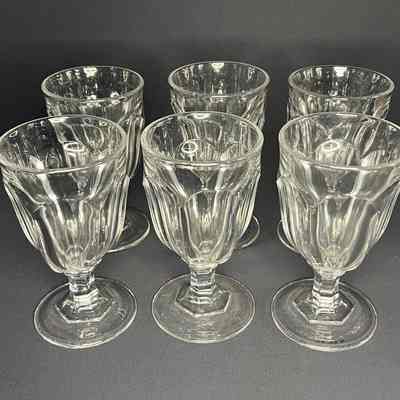
Goblet
Footed goblet, flint glass with tall stem in the flute pattern.
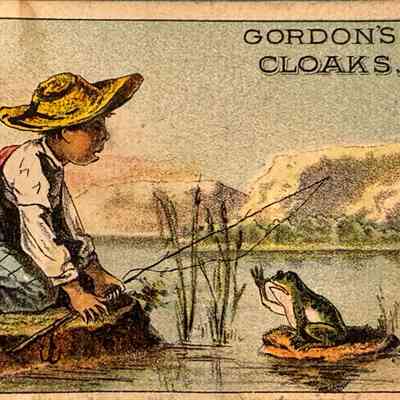
Gordon's Cloaks Trade Cards
Three Gordon's Cloaks, Dress Goods, and Notions trade cards. The three cards show the story of a boy who finds a frog while fishing. He tries to throw a stone at the frog and falls into the lake. Gordon's was located at 79 & 81 East Main St, Rochester, NY.
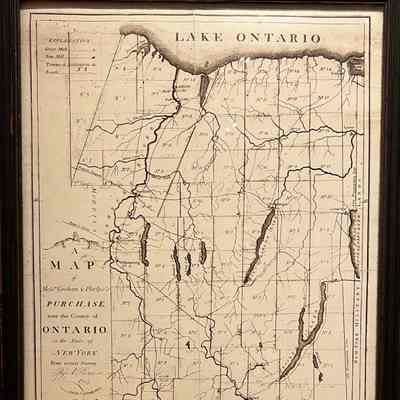
Gorham and Phelp's Purchase
Reproduction. Printed map dividing Phelps and Gorham's purchase into townships; shows sites of mills, towns, villages and roads; hand colored; printed on left side: "A map of Mefsrs Gorham & Phelp's purchase now the county of Ontario in the state of New York from an actual survey". Under this it is signed: "By A. Porter (in script) and 1794". In small print "Engraved by A. Doolittle N Haven".
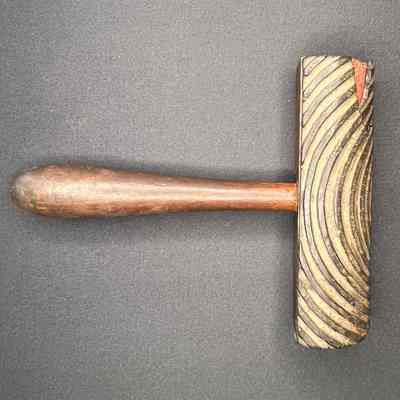
Graining Comb
Graining comb. The head is a quarter circle with holes on the two flat sides to accommodate the handle. On the circular portion the leather is relief-carved in a circular design. The leather extends over onto 2/3 of one of the flat sides and is covered with rectangles carved in relief.
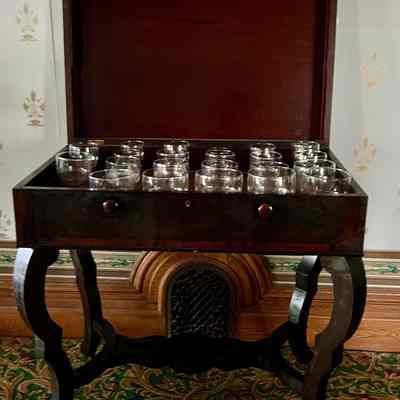
Grand Harmonicon
Mahogany case on stand with 22 toned glasses. Known as a Grand Harmonicon, this is attributed to Francis Hopkinson Smith, a nephew of Francis Hopkinson, a signer of the Declaration of Independence. Smith was based near to Baltimore, MD, building and selling these in the 1825-1835 period. According to Dennis James, a musical performer and curator, this a smaller one of the typical production, and housed in an unusual cabinet. Sometimes referred to as a "glass harmonica." Each glass is blown to a musical pitch. There appear to be parts of several sets of toned glasses. Some are engraved with the note on the stem. It is played by rubbing a wet finger around the rim of the glass.
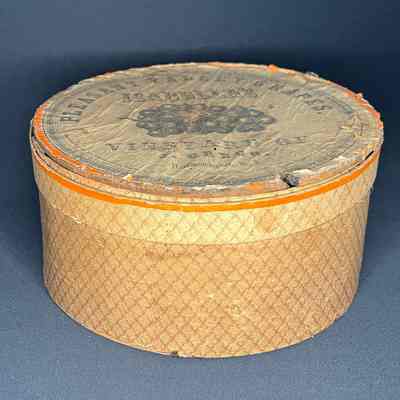
Grape Box
Round grape box covered with a buff-color paper with design of double diagonal red lines forming diamond pattern. Top covered by label containing information, etching of grapes, and a narrow border
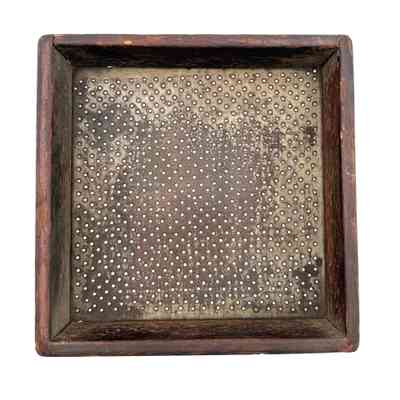
Grater
Square pine frame painted red, secured with strips of wood, and with a pierced tin bottom.
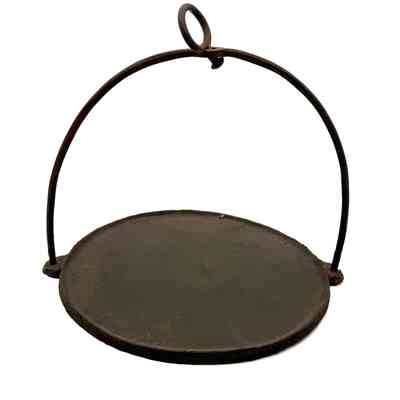
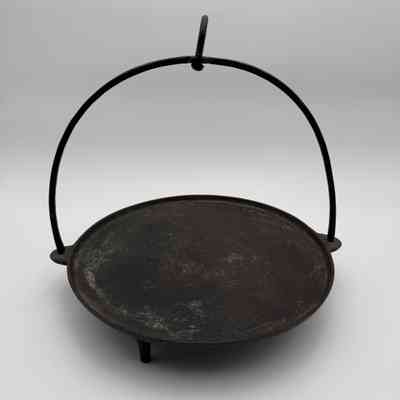
Griddle
Circular cast iron griddle with wrought iron bail handle riveted to base. Handle has a hanging ring.
Griddle
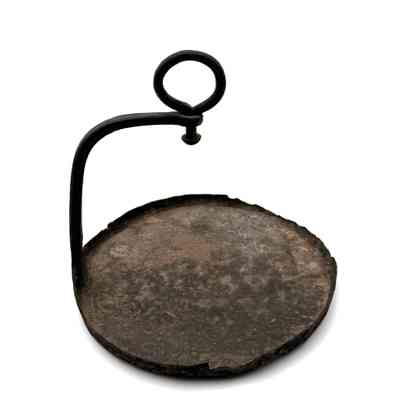
One cast iron griddle with three feet and an arched handle with a swiveling round hook at the top.
Griddle
A round iron griddle with a half handle and hanger.
Griddle
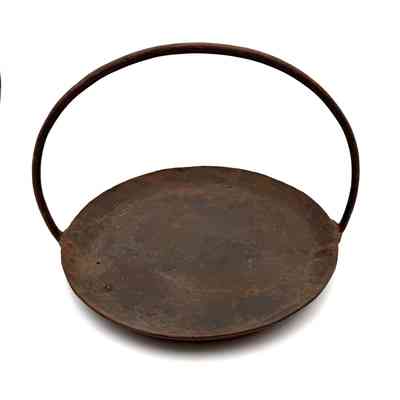
Dished and formed from one piece of iron with an arched handle.
Gridiron
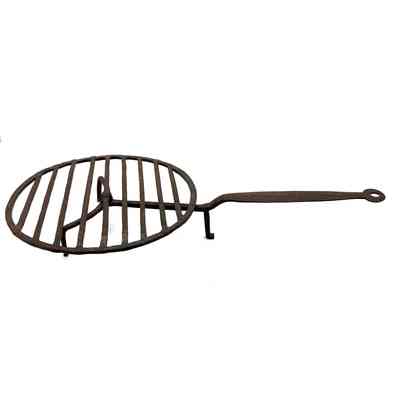
One 3-legged wrought iron gridiron The handle tapers to finial and is pierced for hanging. The grill is attached to the foot and body by an iron pin.
Grill
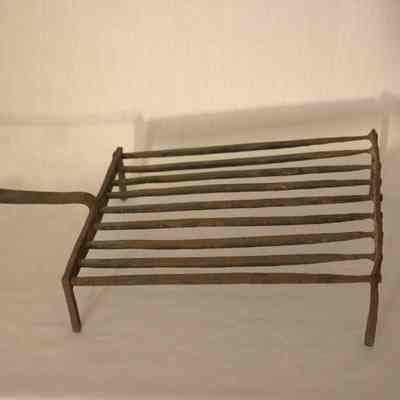
Four feet, with nine support bars in a square shape and a handle, at the end there's a hole for hanging it.
Grill
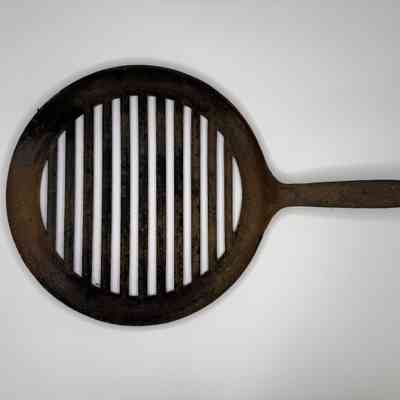
Cast iron grill with long handle with circular loop at the end.
Grisset
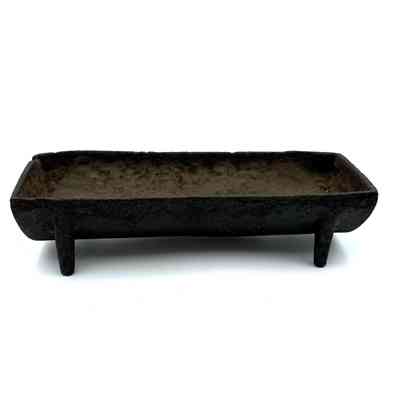
A long, half-round iron pan with four feet. Used to hold fat through which rush would be pulled for coating.
Hair Comb
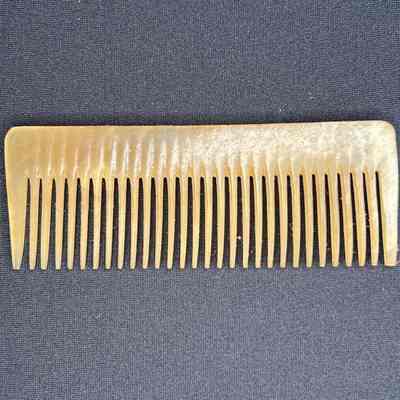
Reproduction. Ivory colored hair comb.
Hair Comb
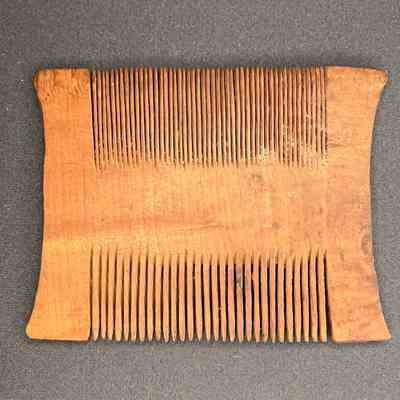
Wooden comb. One side with finer teeth.
Half-Tester Bed
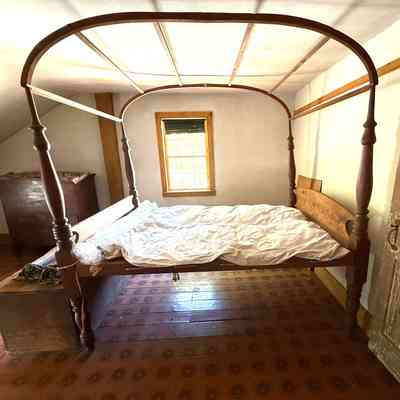
Cherry bed with arched headboard and flat footboard. Turned maple bedposts with cherry stain. Square, drilled rope rails. Eight pine tester rails boards by Edward Ritz in 1972.
Hammer
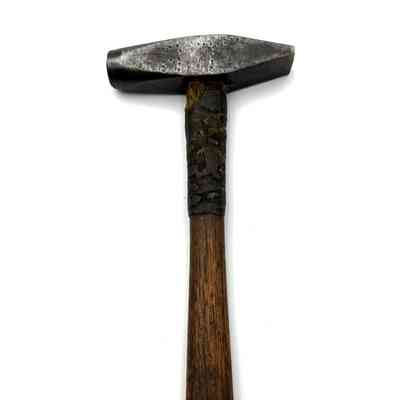
Handle (10") wrapped with tape at head.
Hammered Dulcimer
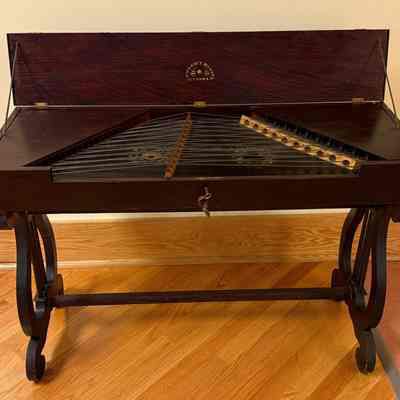
One hammered dulcimer, sometimes called a hammer dulcimer, set into a lidded case, with a craved wooden stand. The case has a hinged top with two cords on each side to keep it propped open. Two triangular panels on each side of the top can be removed to gain access to the pegs and storage compartments. On the right side there are 12 sets of 4 raised iron pegs alternating with 11 sets of 3 iron pegs, which have wire stings that are attached to small raised studs on the other side. There is a black painted sounding board with two circular resonator holes, both of which have a gold floral motif painted around them. One has a gold wooden insert with a spiral pattern carved into it. One bridge, pierced with circular holes, is situated to the left of center, and another is on the far right. The following words are stenciled in gold on the underside of lid: “P. Wight, Maker / Alabama, NY ". Includes 1 hammer, one tuner, and 1 key along with extra strings.
Hammered Dulcimer
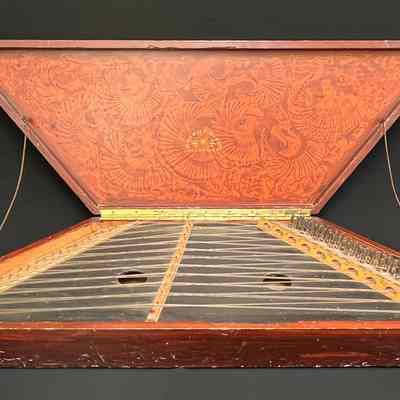
One hammered dulcimer, sometimes called a hammer dulcimer, constructed from painted pine in a trapezoidal case. Painted and grained on inside cover in flowing shell designs. The case is hinged with two cords on each side to keep the propped open. On the left side there are 12 sets of 4 raised iron pegs alternating with 11 sets of 2 iron pegs. The side panels have a clear finish, as do the flank and the sounding board. An iron rod is inset on the edge of the left maple panel and protects the wood from the strings. There is a black painted sounding board with two circular resonator holes. One bridge, pierced with circular holes, is glued almost perpendicular to the front. Another is on the far right. The following words are stenciled in gold on the underside of lid: “P. Wight, Maker / Alabama, NY ". Includes 2 hammers and one tuner.
Hand Broom
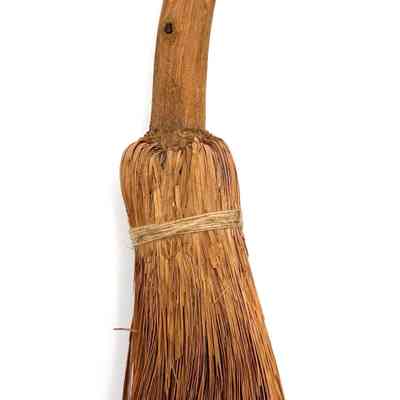
Small hand broom. Wood is shaved, bent to opposite direction, then tied. Used for sweeping out an oven.
Hand Card
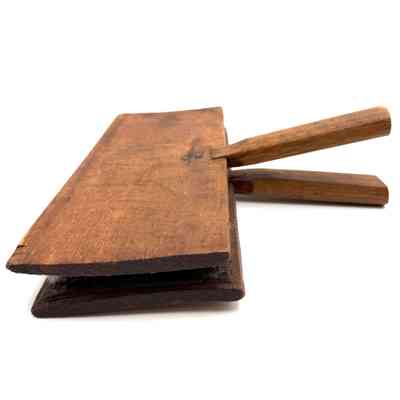
One pair of antique wool cards.
Hand Carder
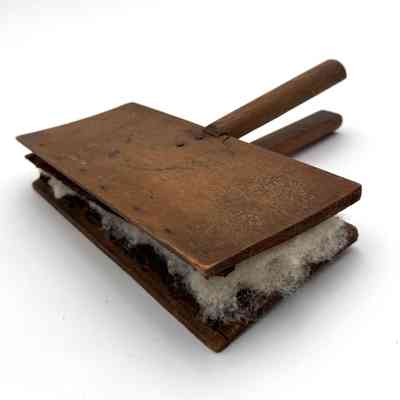
Hand carder with slightly curved paddles. Steel teeth embedded in piece of leather which is nailed to paddle. Half-round handle is notched and attached to paddle with nails.
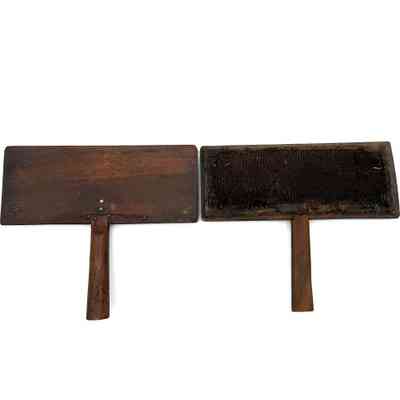
Hand Carders
One pair of hand cards for carding wool.
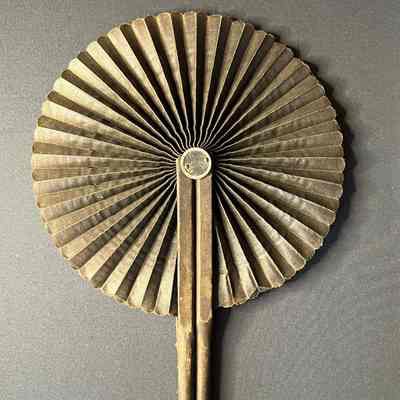
Hand Fan
Circular hand fan. Black linen on wooden frame.
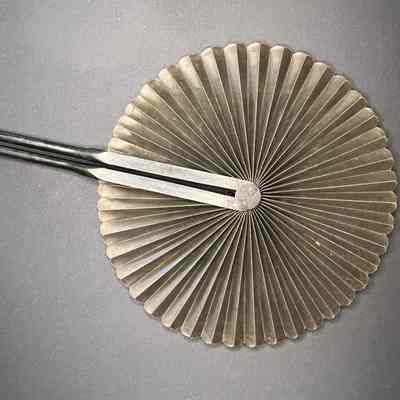
Hand Fan
Black folding hand fan. Possibly a mourning fan.
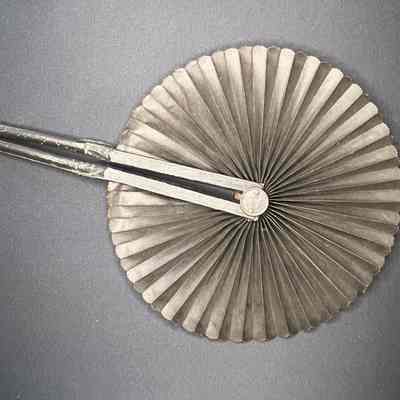
Hand Fan
Circular hand fan. Black linen on wooden frame.
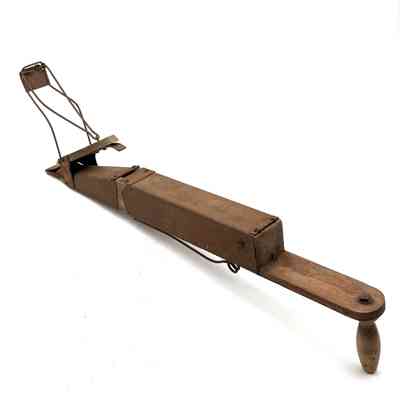
Hand Planter
Narrow wooden box covered with sheet metal and tapered to a point with a trap door at one end and turned handle at other end. Wire spring at upper back and lower front.
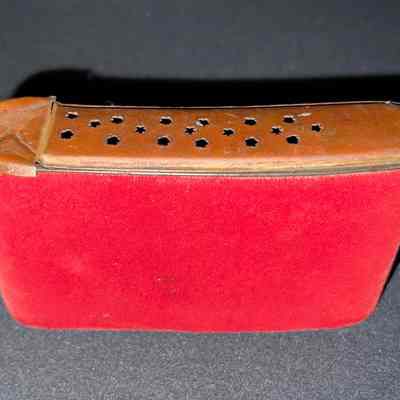
Hand Warmer
Hand warmers covered in red velvet. Sliding lid is pierced and painted. Recovered in red velvet.
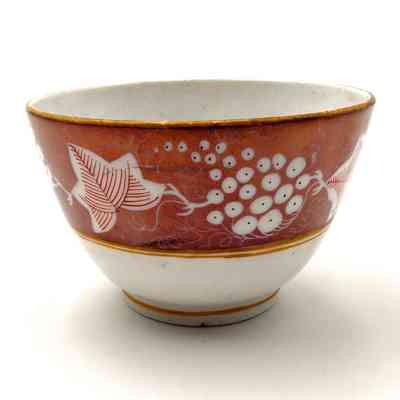
Handless Teacup
Pink luster handless teacup with grapevine detailing along half of the body. Thin gold lines along rim, middle of body, and top of base.
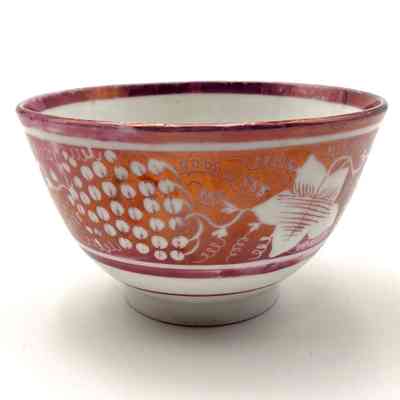
Handless Teacup
Pink luster handleless teacup with grapevine detailing along the majority of the body.
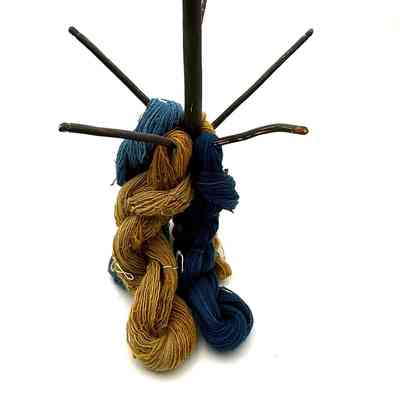
Hanger
The stem of a pine tree with a five-branch section stripped of its bark and painted black. The ends of the stem and branches are carved into circles.
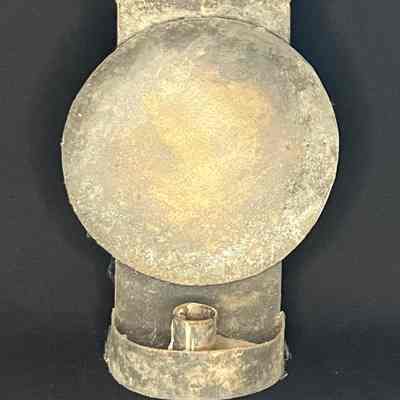
Hanging Candle Sconces
Hanging candle sconce. Single candle cup with round reflector back.
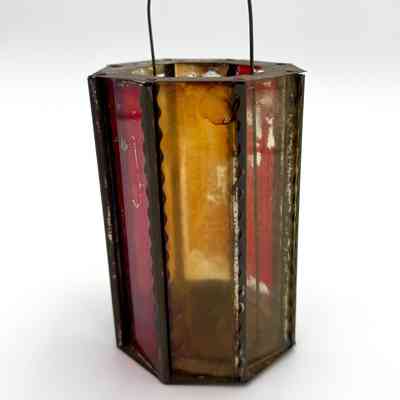
Hanging Christmas Lantern
Tin 8-sided panel candle lanterns, 2 red glass panels, 2 yellow panels, 4 clear glass panels. Center candle holder is attached to the hook, the center can be removed. Coloring on the red and yellow panels are rubbing off.
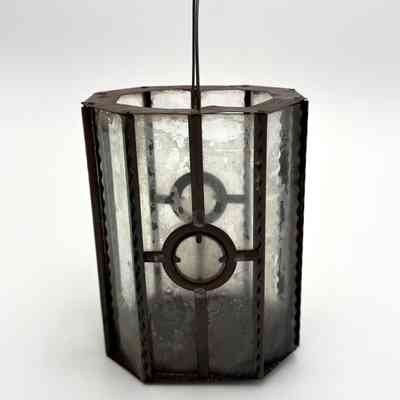
Hanging Christmas Lantern
Christmas Hanging Candle Lantern. 6 sided - hexagonal shaped lantern, oblong. Middle panels has four windows with raised center, tin frame. Center candle holder, attached to handle, can be removed.
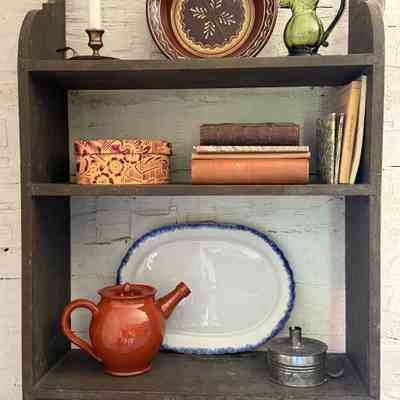
Hanging Shelf
Shelf made of painted wood with three shelves.
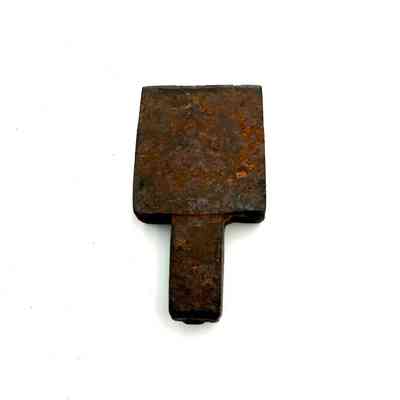
Hardy
Hardy. Triangular wedge on bar that fits into an anvil.
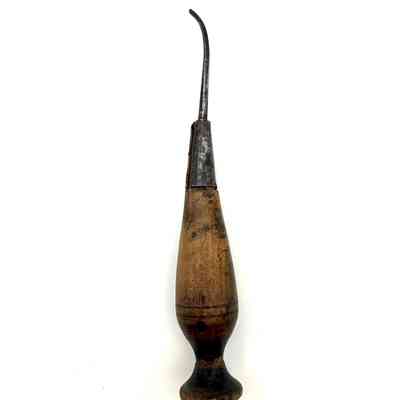
Harness Maker's Awl
Harness maker's awl with flat, curved rod with turned incised handle, flairs out at top. Iron ring, painted black.
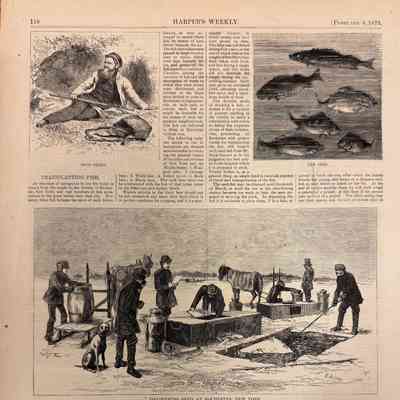
Harper's Weekly Page, 1873
Harper's Weekly magazine page featuring several engravings. Top left engraving is titled "Seth Green" and depicts a bearded man lounging on grass with a creel of fish and and fishing pole in hand. Top right engraving is titled "The Seed" and features six fish suspended in water. Middle engraving is titled "Delivering Seed at Rochester, New York" and features seven men ice fishing, two horses and a dog present in scene. Bottom image is titled "Stocking Barren Waters" and features two men stocking a water source with several onlookers . February 8, 1873 issue.
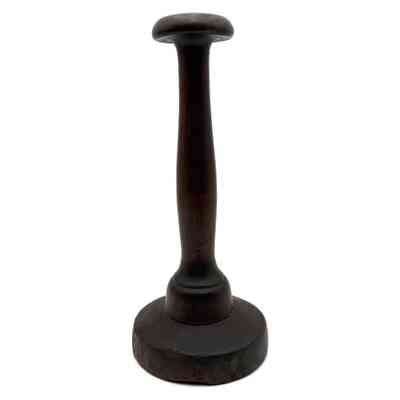
Hat Stand
Maple wood hat stand with dark stain.
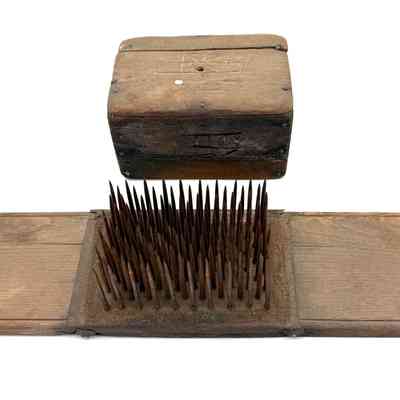
Hatchel
Hatchel with cover. Molded edge and chip carved ends. Punched design on wrought iron plate. Cover has crudely carved geometric designs on top and sides.
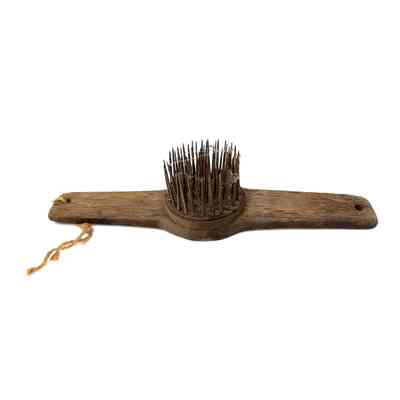
Hatchel
One hatchel with spikes in circular arrangement. A central raised wooden circle, surrounded by an iron band, holds pointed iron nails. This is mounted on a wooden base which has holes punched at each end for either hanging or attaching to another piece for stability.
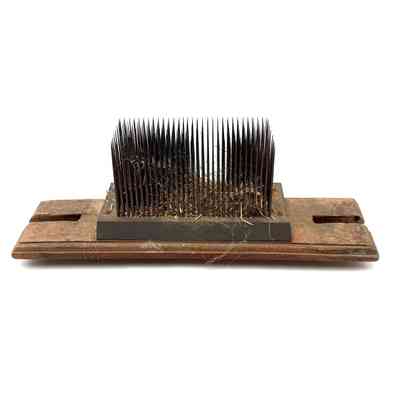
Hatchel
Sheet iron hatchel with steel teeth mounted on a molded edge with a wooden frame. On the sides of the hatchel: "M.C. HEDERWICK GLASGOW"
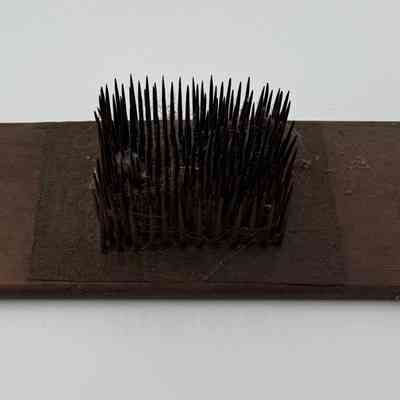
Hatchel
Hatchel in the form of a long wooden plank in the center of which is a piece of sheet iron through which the teeth (nails) are mounted. The ends of the plank are incised with two crosses, a bird, a heart and the date "1782". The sheet iron has a pierced decoration Inscribed on the top of the board: "1782". Pierced into the sheet iron: "A.M."
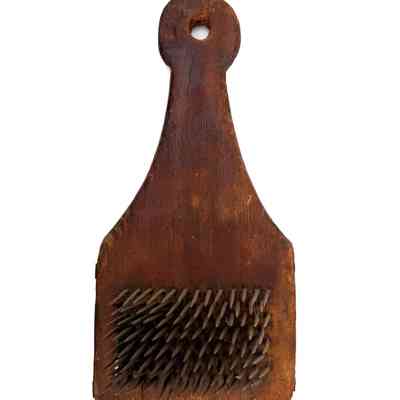
Hatchel
Hatchel with a hole for hanging.
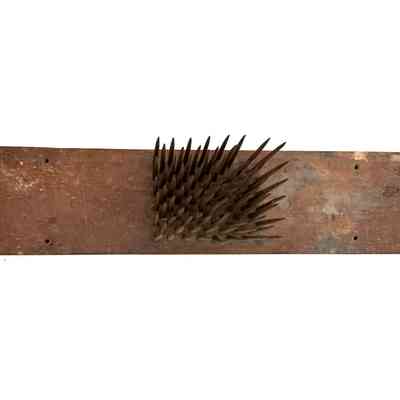
Hatchel
A wooden board with sharp, long wrought nails driven into the board.
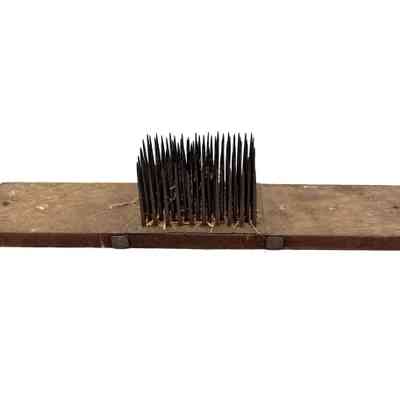
Hatchel
Hatchel with round wrought iron spikes.
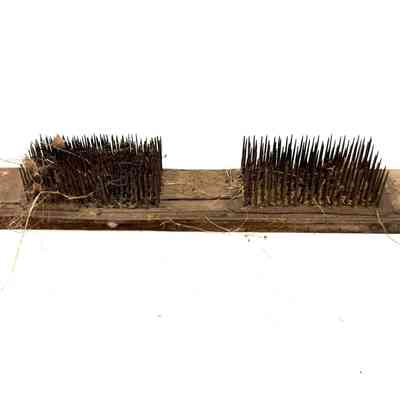
Hatchel
Hatchel. Molded edges and rounded wrought iron spikes in two sections.
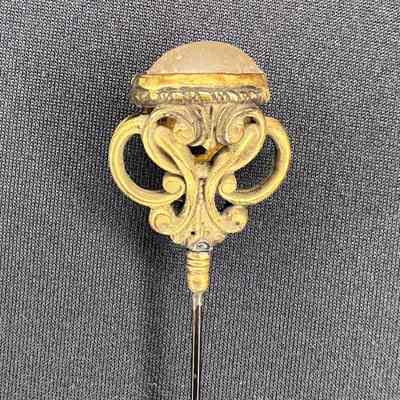
Hatpin
Hatpin tipped with an opal-like stone in a Baroque setting. MacKay family piece.
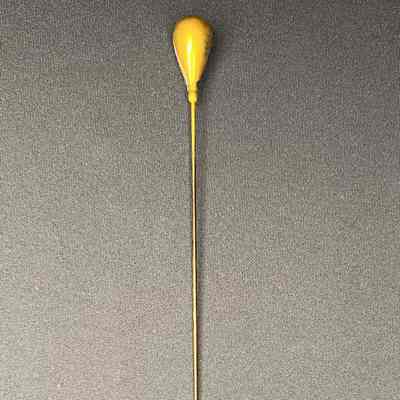
Hatpin
Hatpin with gold covered head. MacKay family piece.
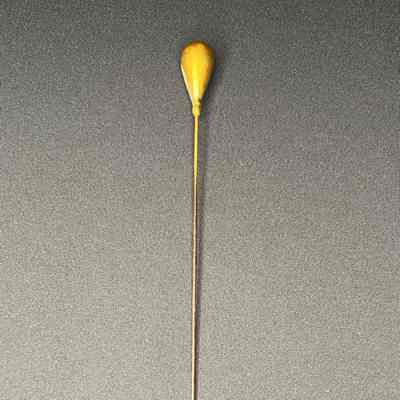
Hatpin
Hatpin with gold covered head. MacKay family piece.
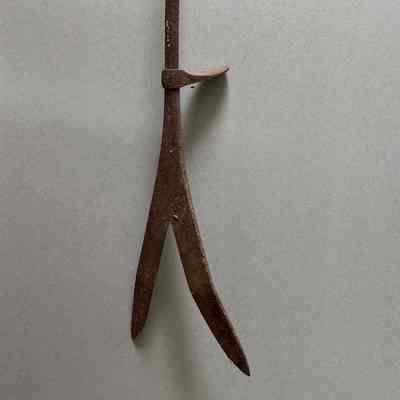
Hay Knife
Hay knife with a wooden handle at the top and cast iron handle near the bottom. Wide cast iron double prongs at the bottom that form an upside down "V" shape.
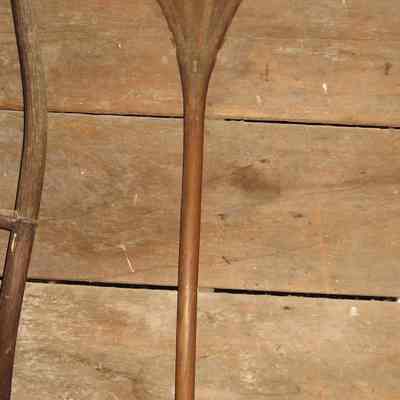
Hay Lifting Fork
Hay fork with four "fingers" separated by three triangular wooden wedges.
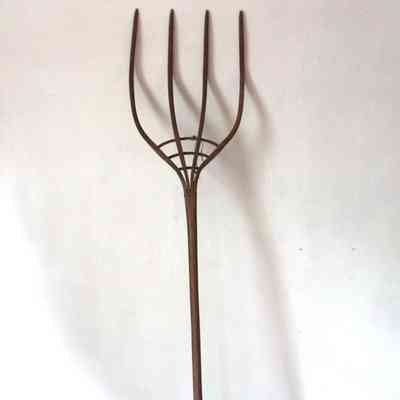
Hayfork
4-pronged with 3 spreaders and an iron riveted reinforcement. "J RUHL" carved in handle.
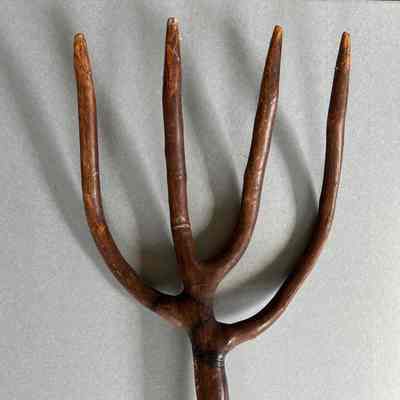
Hayfork
A hayfork with four prongs made out of a natural tree formation.
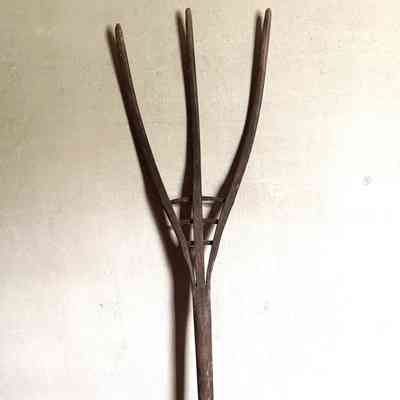
Hayfork
A wooden hayfork.
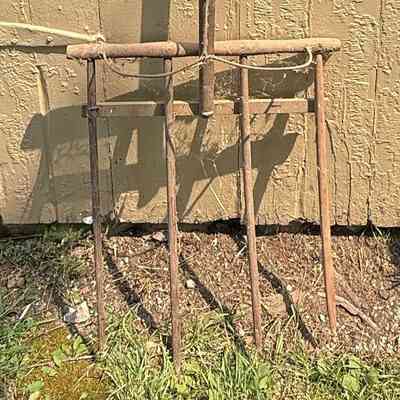
Header Fork
Header fork with long, rounded, wood handle connected to fork by nails and washers. Fork has four round wooden tines attached to two horizontal wood supports by screws, and doweling the tines into holes in one of the supports. 'M' shaped wire attachment at the top of the fork, connected to the top rail of fork and the handle by round eye screws.
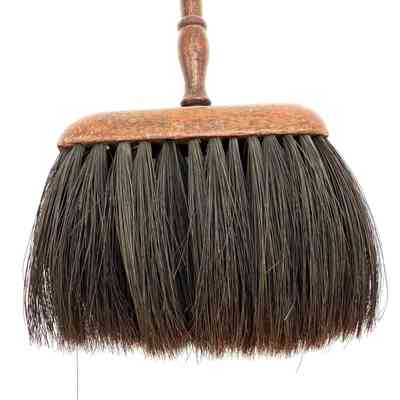
Hearth Broom
Hearth broom with acorn finial and black bristles.
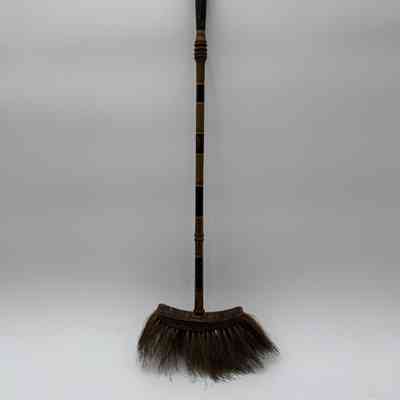
Hearth Brush
Turned, handled, hearth brush with arched bottom and light-colored bristles. Handle painted black with gold, red and yellow decorations.
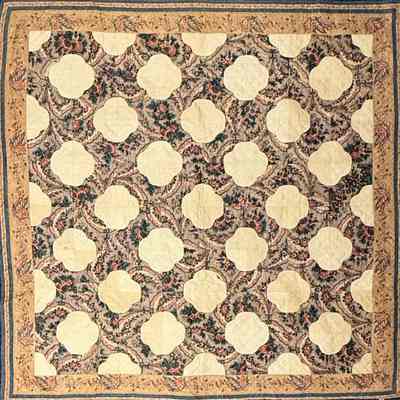
Hearts and Gizzards Quilt
Cut and pieced quilt in natural muslin. The design is pieced with a floral chintz border (of another floral chintz) with a double band of deep blue at the outer edge. Center chintz is a pattern of roses and swags. Hearts & Gizzards pattern. "The pattern is pieced from a single chintz, and the edges are turned in; there is no sperate binding. Note the mitered corners of the lily-of-the-valley border. Chintz border designs were printed in linear runs from which individual strips could be cut for use on quilts, bed curtains, and drapery." - Elizabeth Davis, "A Stitch in Time: Quilts from the Genesee Country Village & Museum", 2005.
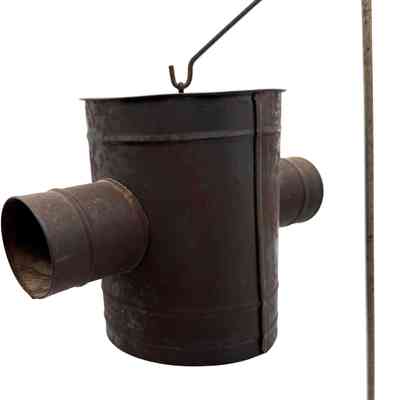
Heater
Tin and iron "Falls Heater" with cast iron base and adjustable iron rod holder. The heater is place over a fire directing the heat through the two side pieces.
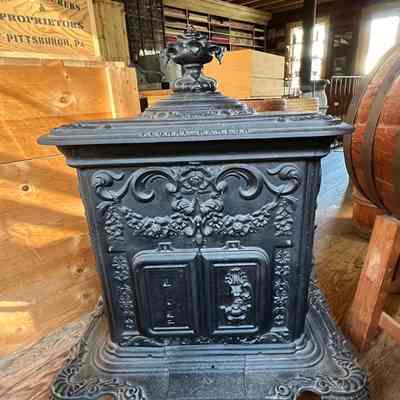
Heating Stove
One cast iron parlor stove. Stove has two oblong doors in the front, one door is missing a handle. Elaborate raised decoration includes floral, scroll and rope motifs. One side has a door, possibly for removing ashes. Round lid on the top of the stove has an urn-shaped handle.
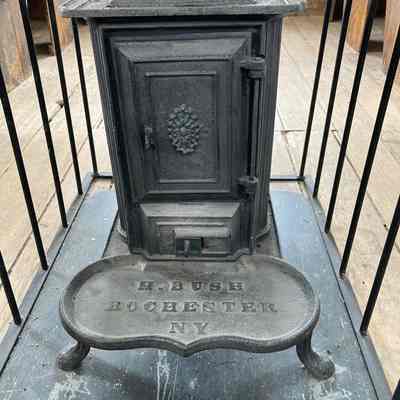
Heating Stove
Rectangular cast iron stive with reeded columns on sides and back, cabriole type legs and shaped apron.
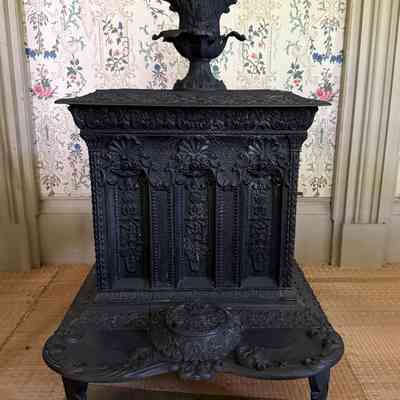
Heating Stove
Rococo revival parlor stove.
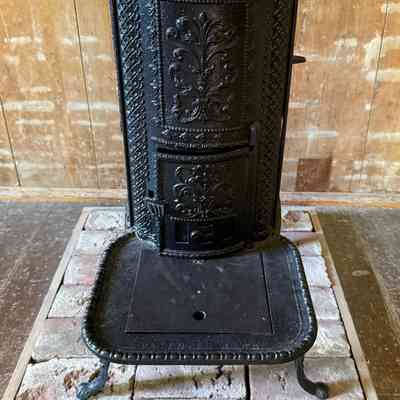
Heating Stove
Cast iron parlor stove.
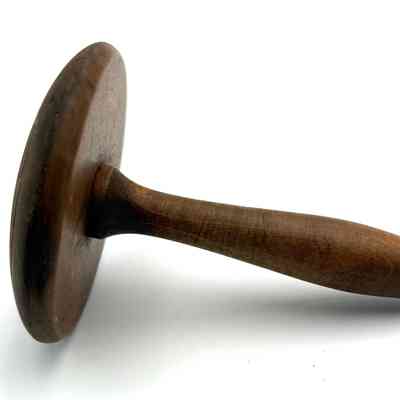
Herb Masher
Wooden herb masher. Concentric circles cared into bottom of masher. Knob at the end of the handle.
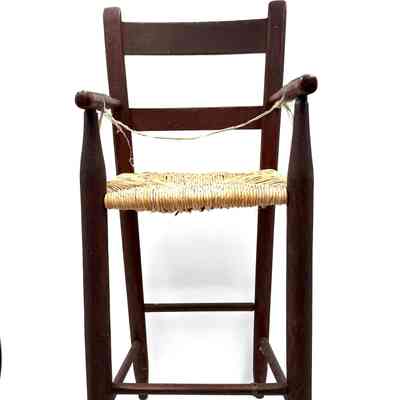
Highchair
Highchair with rabbit-ear back posts and a two-slat back. Turned arms supported by the front legs and modern rush seat. Red paint over the old black paint.
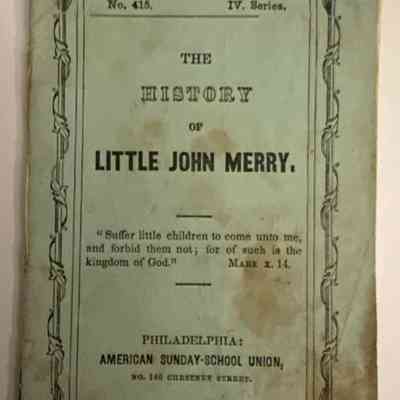
History of Little John Merry, The
Small 16-page Sunday School tract. Series IV, Number 415.
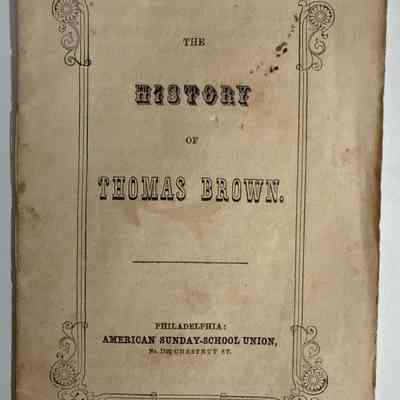
History of Thomas Brown, The
Small 24-page Sunday School tract. A small scrap of silk used as a bookmark was pressed between the pages.
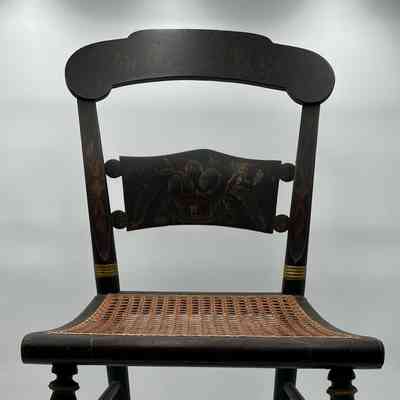
Hitchcock Chair
Painted, button-back, crown top and grained black over red with gilt stenciling. Caned seat. Turned front legs and stretcher with gilt trim. Outline striping on stiles and seat frame.
Hole Punch
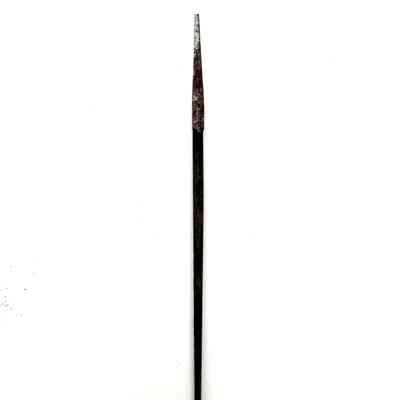
Shoemaker's leather hole punch.
Holy Bible, The
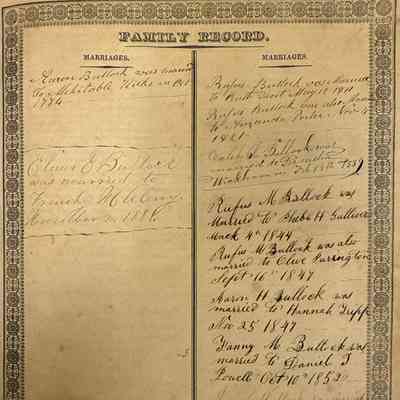
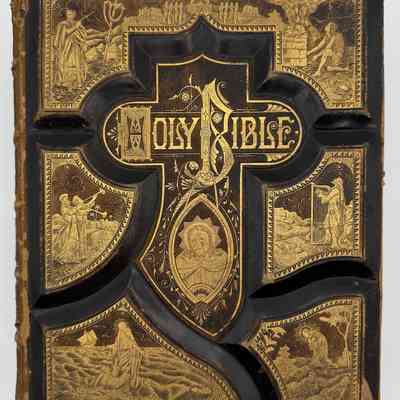
Bullock family Bible containing the Family Record recording the births, marriages and deaths spanning the years 1774 to 1935.
Honorable Discharge Certificate
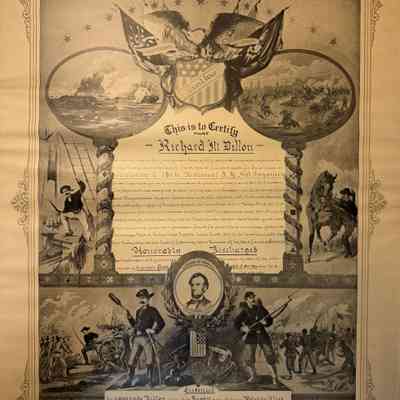
Civil War honorable discharge document for Richard M. Dillon. It lists the numerous battles he fought in and lists the names of his wife and children. This was presented to his wife Susan and children Robert Dillon and Alice Kember Dillon, upon his death in 1915.
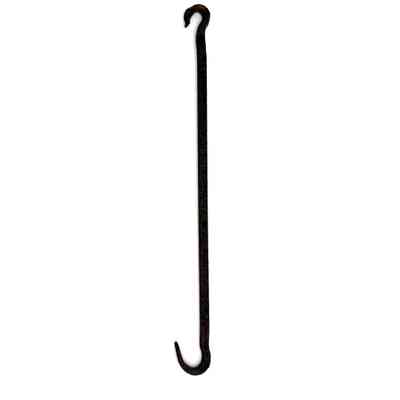
Hook
Double crane hook .
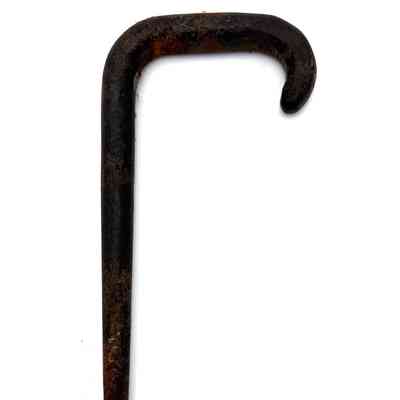
Hook
Wrought iron hook.
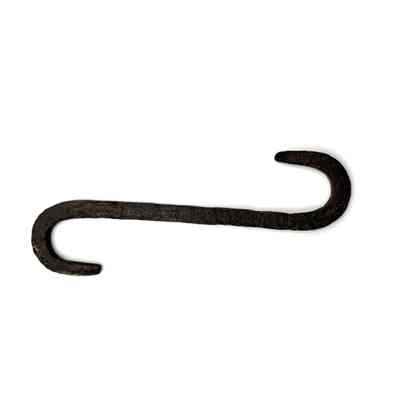
Hook
"S" shaped crane hook.
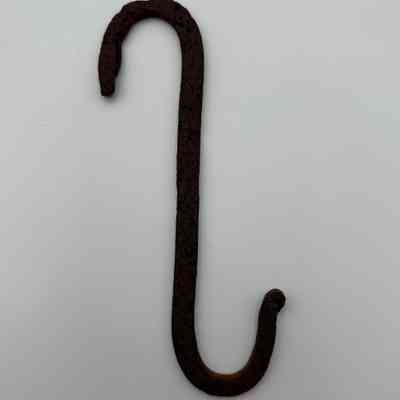
Hook
An iron "S" hook.
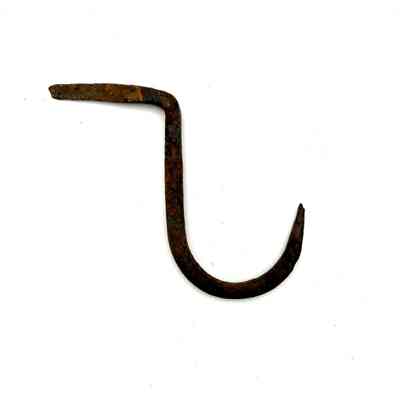
Hook
Beam hook - straight end for driving in a beam and curved end for hanging.
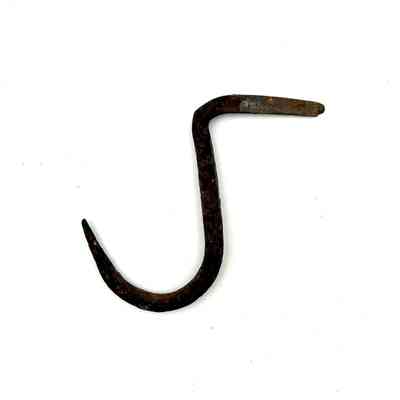
Hook
Beam hook - straight end for driving in a beam and curved end for hanging.
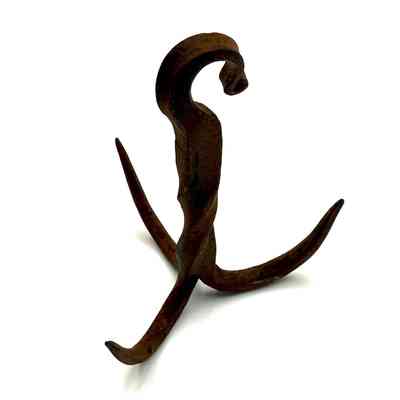
Hook
Triple hook with a twisted stem.
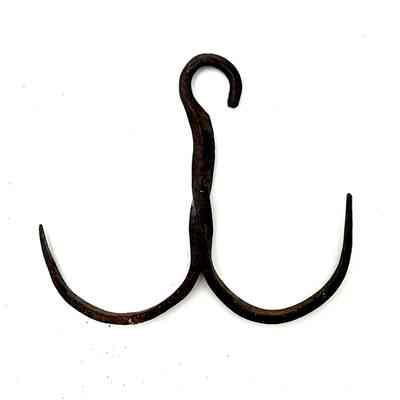
Hook
Double hook with a twisted stem.
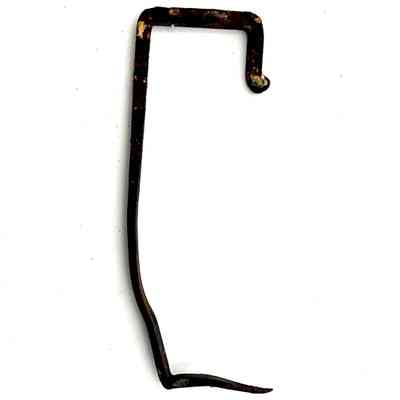
Hook
Hook and nail. Three-sided wrought hook probably for lighting device.
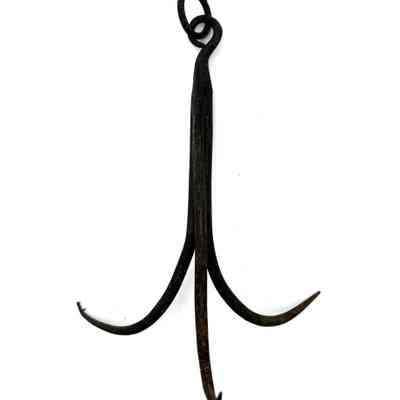
Hook
Three hook hanger with ring for hanging.
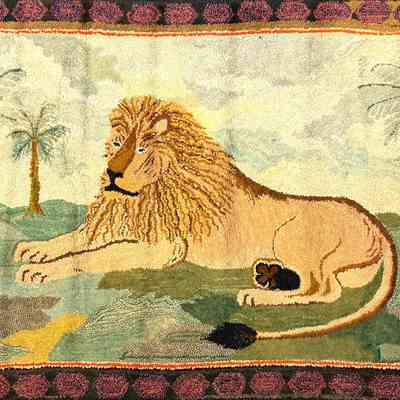
Hooked Rug
Wool hooked rug. Features a lion reclining in a field surrounded by palm trees and fields, with clouds in the sky. Felt backing and bound edges. Hooked by Ada Borden Nye of East Aurora, New York.
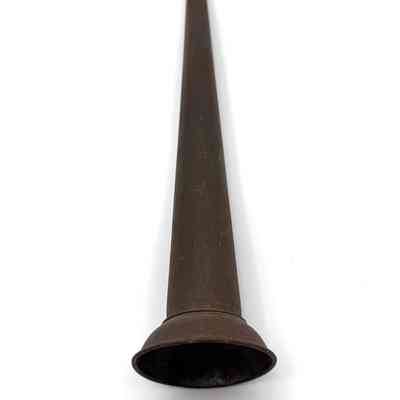
Horn
Tin peddlar's horn.
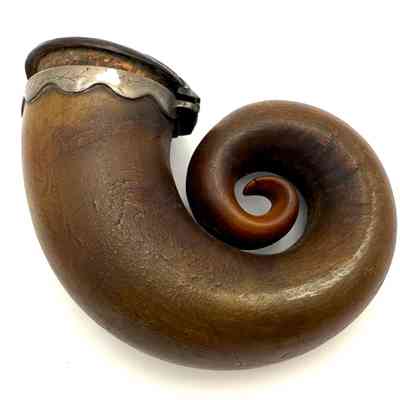
Horn Snuffbox
A Scottish mull-style snuffbox made of scrolled horn, featuring a silver-rimmed opening and a horn cover with a cork base. The hinge is silver and wing-shaped with a double curve.
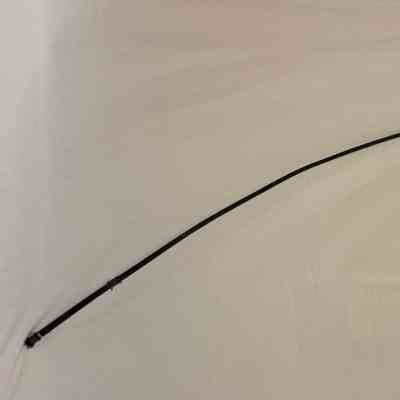
Horse Crop
Horse crop made of a branch
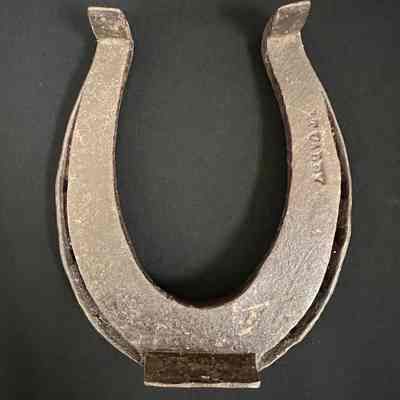
Horseshoe
One hand forged horseshoe with raised ends and front, stamped JT Caley.
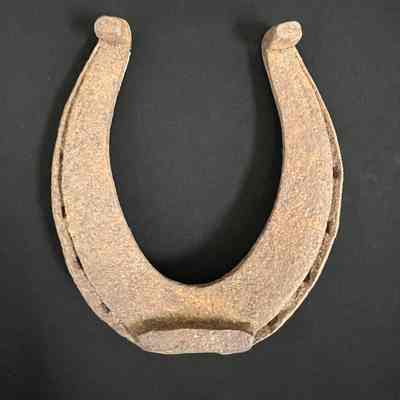
Horseshoe
One hand forged horseshoe with raised ends and front, and lip pointed downward. Stamped with name or number, illegible.
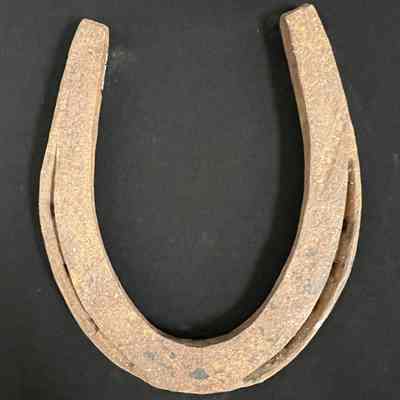
Horseshoe
One flat hand forged horseshoe , stamped JT Caley.
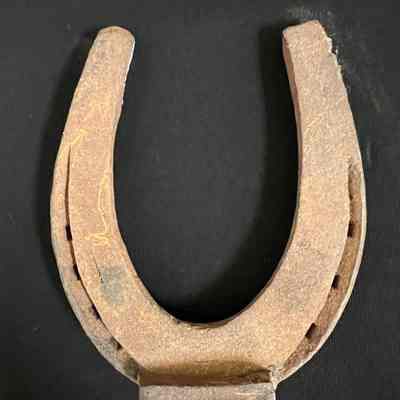
Horseshoe
One hand forged horseshoe with raised front and lip.
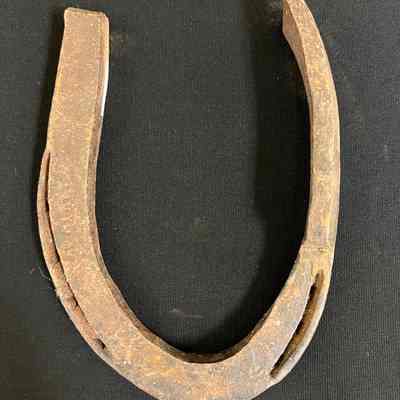
Horseshoe
One hand forged horseshoe with one side flat and the other curved upward, stamped JT Caley.
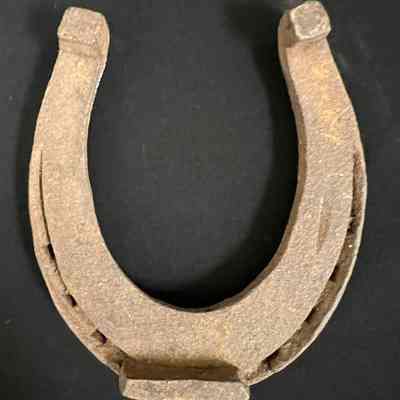
Horseshoe
One hand forged horseshoe with raised ends and front, and tiny lip pointed downward.
Horseshoe
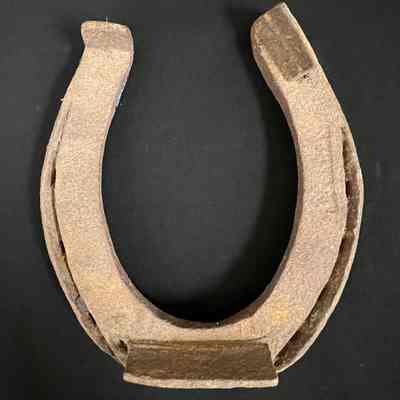
One hand forged horseshoe with raised ends and front, and lip pointed downward. Stamped with name JT Caley.
Human Yoke
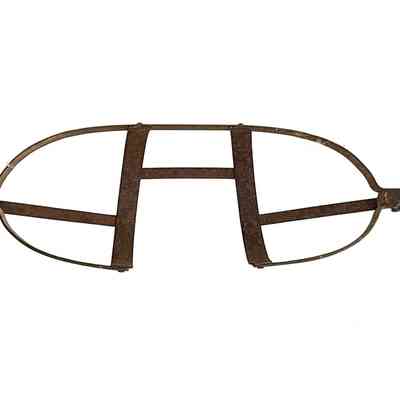
Human yoke made of iron bands or rods with wooden ends for ropes.
Husking
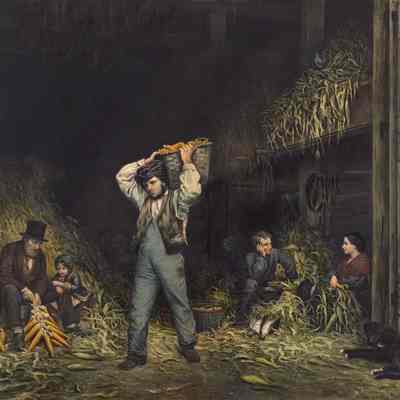
Hand colored lithograph entitled Husking. Image depicts barn interior with one woman and two people in background husking corn. Chicken perches in hay loft. In the center, a young farmer bears a basket of husked corn on his shoulders. On the left, an older man braids corn while young girl at his knee looks on. On the right, a young couple sit gazing at each other. The young man is dressed for hunting, wears a powder horn, and has brace of birds at feet. Outside the barn door, on right is a rifle. Above the rifle is the inscription "Union Forever." This print is after a work, "Corn Husking 1860" originally by Eastman Johnson, in which the inscription on the barn door was Lincoln-Hamlin, the presidential ticket for 1860. This image is considered one of the best 50 Currier and Ives images.
Husking Peg
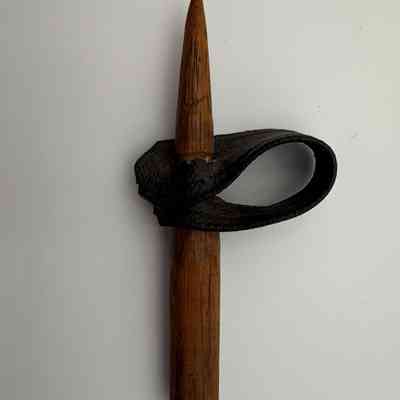
Wooden husking peg with attached leather loop. Sharpened point at one end.