

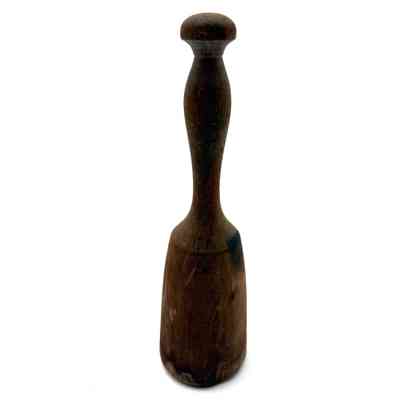
Masher
Turned wooden masher.

Matchbox
Matchbox. Round covered box on arched backplate, painted green with gilt leaves on backplate.

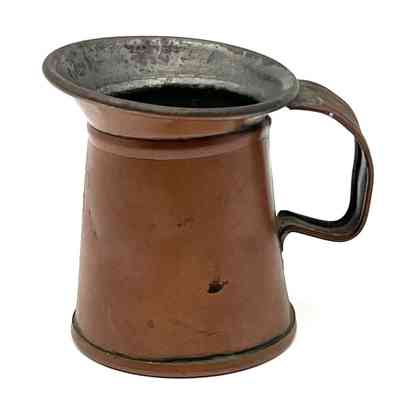
Measuring Pitcher
A copper measuring pitcher with a wide neck and strap handle on one side.
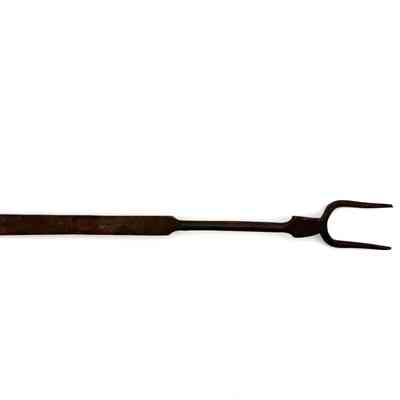
Meat Fork
Wrought iron meat fork.
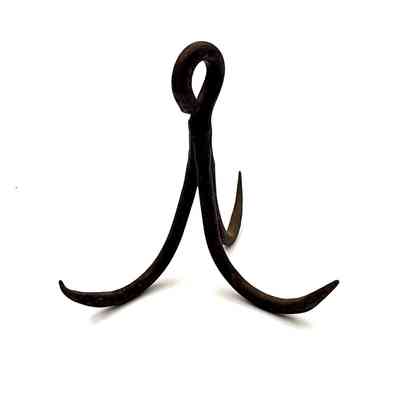
Meat Hook
Three-pronged hook with hanging ring.
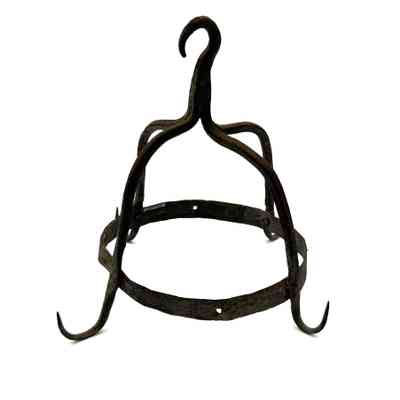
Meat Hook
A meat hook made of four hooks formed from one wrought iron rod and riveted to a thin circular support at the base.
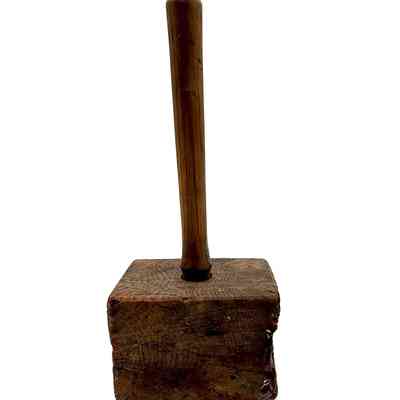
Meat Maul
Burl head and turned ash handle.
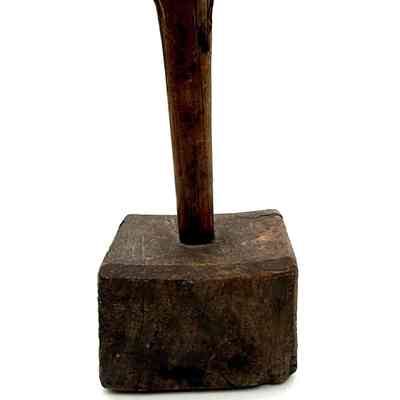
Meat Maul
Burl head with a turned ash handle.

Medical Bag
An alligator skin doctor’s bag. The bag has latches made of brass and a carry handle also in alligator. There is a brass plate on the front that is inscribed “Dr. J. Perry Horle.” The inside of the case has several compartments. One side has a removeable insert that holds eleven glass vials with corks and identified by paper labels. The back of the insert is covered in brown leather and has a pocket for papers and such. Behind this insert is space for an additional eight vials. On the other side of the case is space for eleven more vials. Underneath the vials is a compartment with a door made of brown leather and lined with purple velvet. Inside is a brass syringe and parts of a syringe. This bag was owned by Dr. John Perry Horle (1868-1927) of Fly Creek, NY.
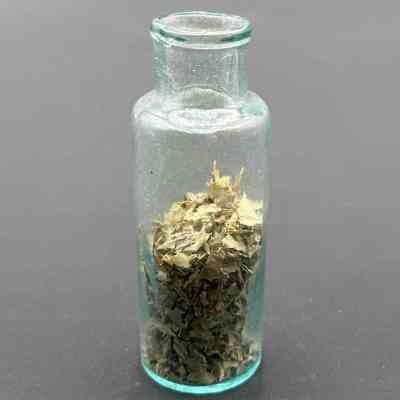
Medicine Bottle
Aqua medicine bottle with pontil scar and 3/4" neck.
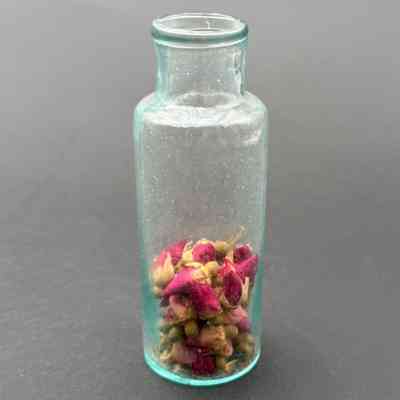
Medicine Bottle
Aqua medicine bottle with pontil scar and 3/4" neck.
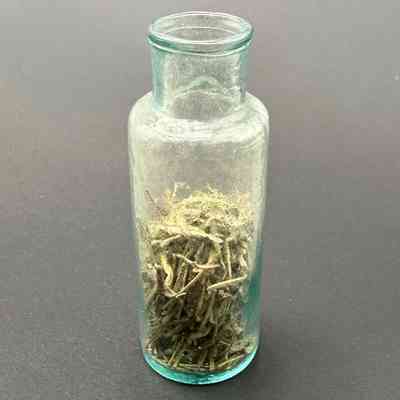
Medicine Bottle
Aqua medicine bottle with pontil scar and 3/4" neck.
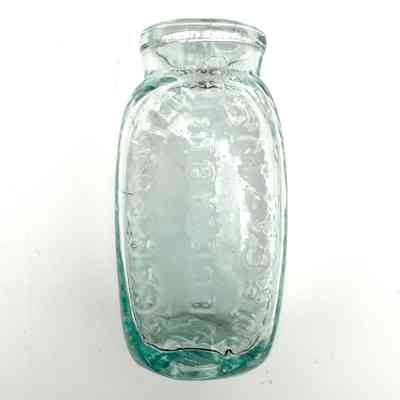
Medicine Bottle
Aquamarine molded blown glass pill bottle. Pontil mark on the bottom.
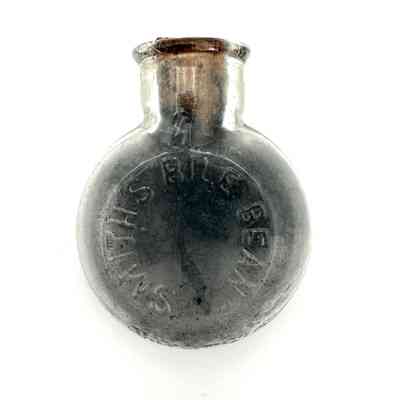
Medicine Bottle
Small bottle. Original cork intact though broken off. Has original material inside.
Medicine Bottle
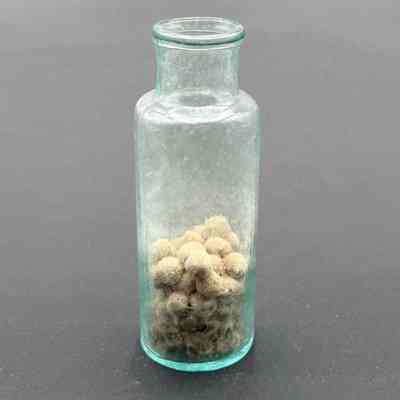
Aqua medicine bottle with pontil scar and 3/4" neck.
Medina Tribune, The
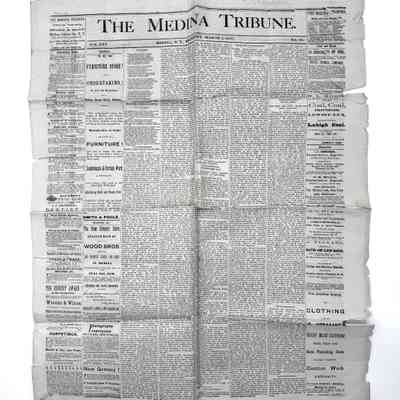
Medina Tribune newspaper, March 1, 1877
Melodeon
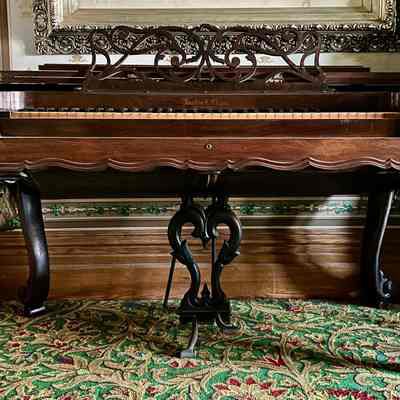
Rectangular reed melodeon with pierced music rack. Wavy molding around case. Cabriole legs with cast iron grape design. Marked "Austin C. Chase / Syracuse".
Memoir of Jude Cain
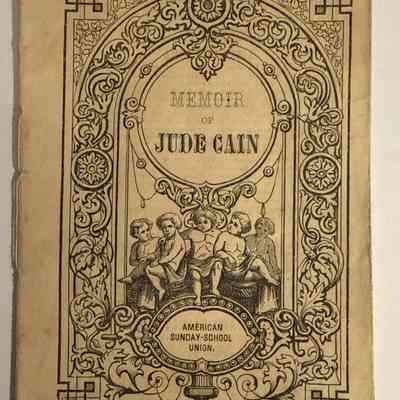
Small 16-page Sunday School tract. Inside the pages was a small green ticket with a Bible verse on it.
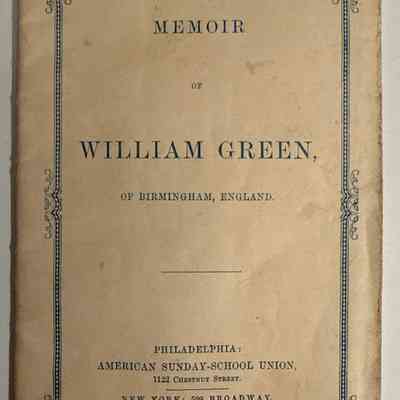
Memoir of William Green
Small 24-page Sunday School tract.
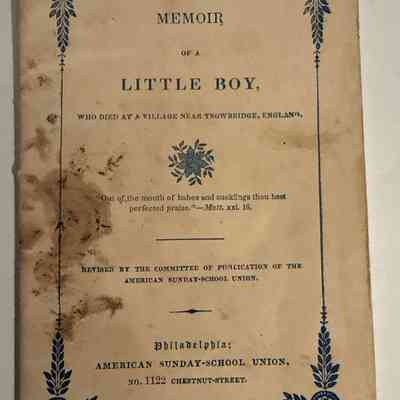
Memoir of a Little Boy
Small 22-page Sunday School tract.
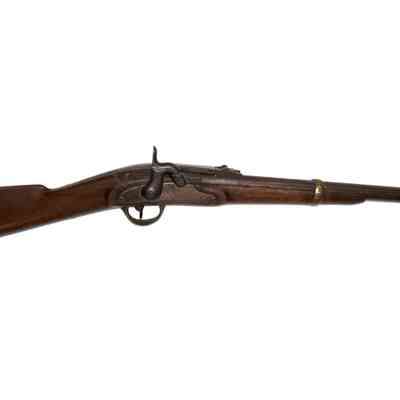
Merrill Carbine Rifle
.54 caliber, single-shot, percussion, breechloader used mainly by Union cavalry units. It used the .54 caliber Minie balls with paper cartridges which were loaded by lifting the top of the breech lever.

Metal Box
Flat toped box with a wire bail handle and a lock and key. Painted black with red and gold striping. Key included. Printed on a piece of paper glued to the top of the box: "J. George Kaelber". Stenciled on bottom: "02".
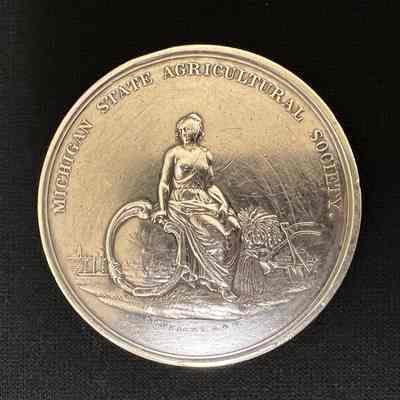
Michigan State Agricultural Society Medal
Michigan State Agricultural Society Medal. (Front) Features a woman dressed in a toga sitting among agricultural devices and sheaves of wheat with a harbor view in the background. Top of coin reads "Michigan State Agricultural Society". (Back) Inscribed: "To J. F. Gordon Co. For self raking binding harvester At The 20th Meeting 1868". Top of coin reads "Michigan State Agricultural Society" and bottom reads "Organized March 24th 1849." Made of silver.

Military Register, Company C, NY 151st
Military register for Company C of the New York Volunteers 151st Regiment. Organized at Lockport, Niagara Co., New York, 1862. Mustered into service October 22, 1862.

Milk Can
Milk can. Covered with large strap handle. Impressed on top of cover: "2"

Milk Jug
Milk jug. Footed flint glass with a free-form, applied handle. Base is molded in a rayed design.

Milk Pan
One ceramic yellow ware milk pan with flaring sides and no turned lip. Also called a "nappy".

Milk Pan
One ceramic yellow ware milk pan with flaring sides and no turned lip. Also called a "nappy".

Milk Pan
One ceramic yellow ware milk pan with flaring sides and no lip. Along the outer bottom rim are three crescent-shaped cut-outs, so that the pan actually sits on three arcs of the rim.

Milk Pan
Yellow ware milk pan with flaring sides.

Milk Pan
Redware body with gray glaze to mimic stoneware. George Hamell identifies this milk pan as the work of Elonzo D. Lewis of Bushnell's Basin, NY.

Milk Pan
Rockingham glaze milk pan with flat bottom and flaring sides.
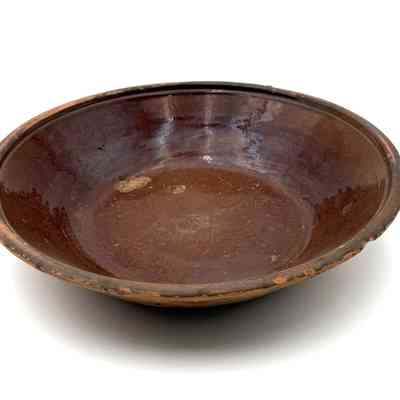
Milk Pan
A milk pan with a shallow basin glazed on the inside only with brown and tan lead glaze, with a beaded lip.
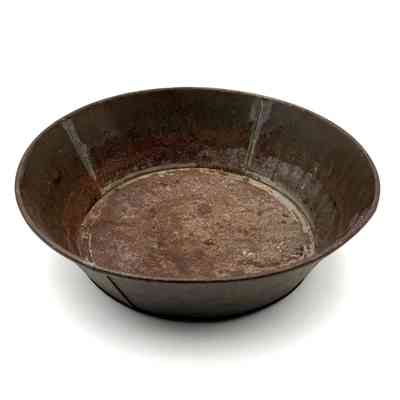
Milk Pan
Milk pan with five-piece construction.

Milk Pan
Milk pan made in five sections.

Milk Pan
Yellow ware milk pan with deeply sloping sides.

Milk Pan
Glass milk pan

Milking Pail
Milking Pail. Wire bail handle with wooden grip on pail, round wire handle on lid.

Milking Pail
Wire bail handle on pail. Small wire handle on lid.

Milking Pail
Cream pail with wire bail handle on pail with small wire finial on lid.

Milking Stool
Rectangular seat with single central leg. Leg is rectangular at top and tapers to circle at base and is enclosed by a wrought iron band.
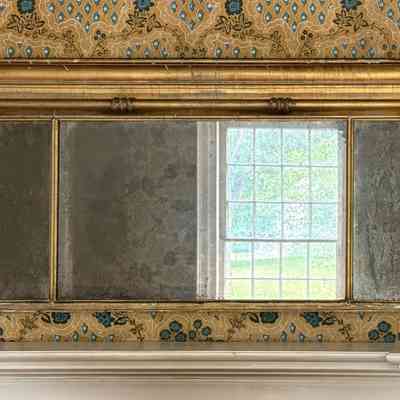
Mirror
Over mantle mirror.

Mirror Supports
Mirror supports with rosette centers

Miter
Miter gauge.
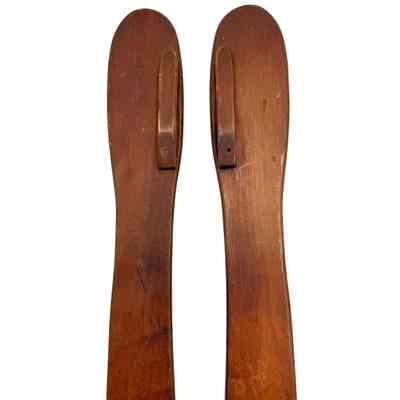
Mitten Stretcher
Two mitten stretchers. Flat wooden forms in the shape of mittens complete with thumb.

Mixing Bowl
One yellow ware mixing bowl. Decorated with a wide white band surrounded by two thin white lines. Bowl was made with a slight vertical base.

Mixing Bowl
One yellow ware mixing bowl, decorated with three white bands 1/8" wide. Bowl has a base ring approx. 3/8" high.

Mixing Bowl
One yellow ware mixing bowl, decorated with three white bands 1/8" wide. Bowl has a base ring approx. 3/8" high. This bowl is a perfect match to the larger bowl 2002.002.2.
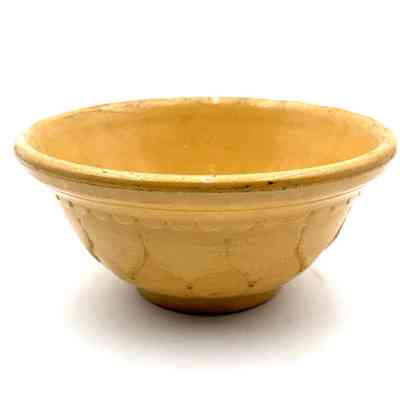
Mixing Bowl
Mixing bowl with band of scallops under the molded rim and over a molded and beaded gothic arch design. Footed.

Mixing Bowl
Large turned wooden mixing bowl with hole for hanging.
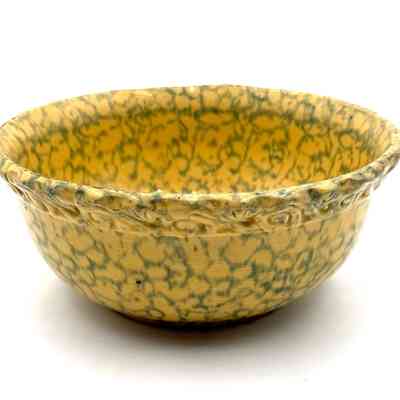
Mixing Bowl
A mixing bowl decorated with a yellow and green spongeware pattern.

Mixing Bowl
Maple mixing bowl.
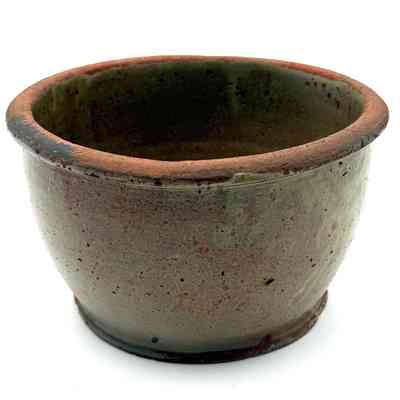
Mixing Bowl
A redware bowl with a bulbous shape and a greenish glaze.
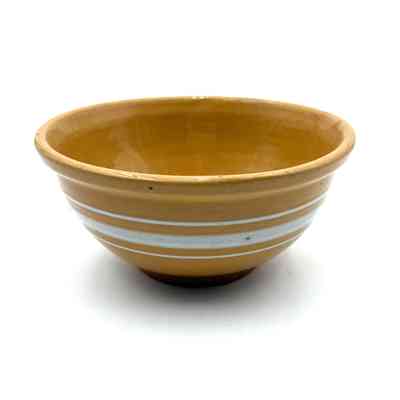
Mixing Bowl
Footed yellowware mixing bowl with three decorative white bands running around the circumference of the bowl and two thinner bands above and below a thicker band in the middle. Lip around the edge of the bowl.
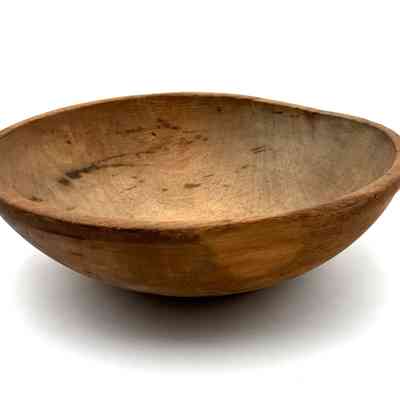
Mixing Bowl
Turned and lipped wooden bowl.

Mixing Bowl
Footed mixing bowl with exterior white band outlined by bands of starch blue and decorated with blue seaweed. Mochaware.
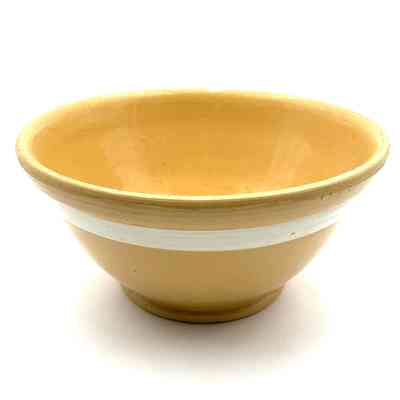
Mixing Bowl
Mixing bowl with a decorative band of white glaze.

Mixing Bowl
Footed mixing bowl with a wide white stripe outlined by two brown stripes.

Mixing Bowl
Mixing bowl with flared sides and thick molded rim and glazed interior.

Mixing Bowl
Maple turned mixing bowl with a plain body.
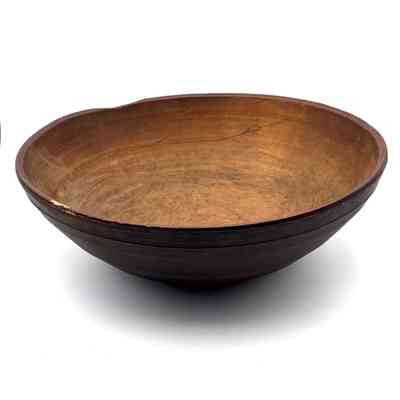
Mixing Bowl
Turned wooden bowl. Painted red on exterior.
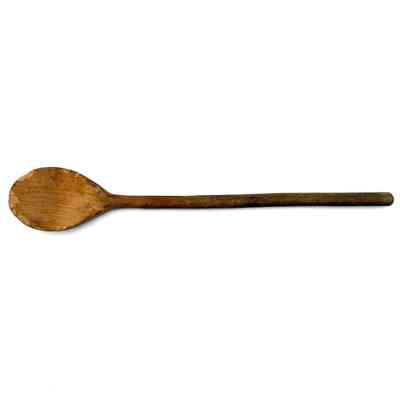
Mixing Spoon
One wooden spoon.

Mixing Spoon
spoon with deeply carved bowl.
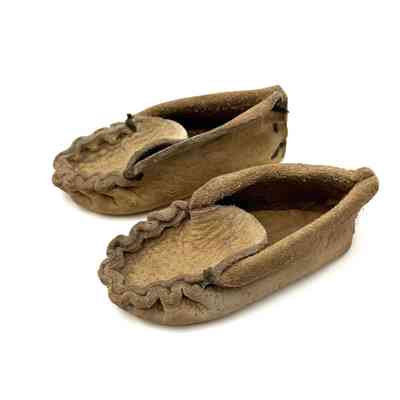
Moccasin
Moccasin, child's Two pieces leather, tied together with black linen thread.
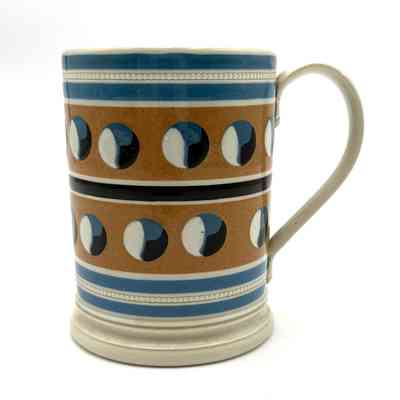
Mochaware Mug
Mochaware mug with in a "cat's eye" pattern. Two rows of white/blue/black circles on a mustard background made by Donald Carpentier. Band of white, blue, white beading with blue and white on top and bottom. White base with footed, white handle.
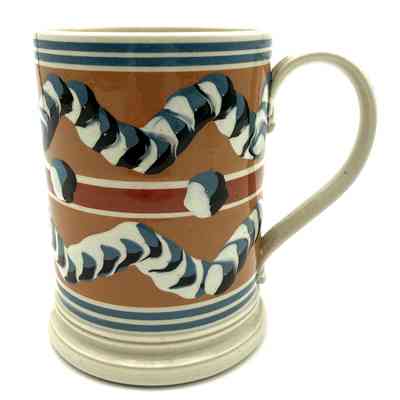
Mochaware Mug
Mochaware mug in an "earthworm" pattern. Circles in blue/black/white on a light brown background over 5 circles of blue/black/white set in band of white/rust/white. White/blue/white/blue and white band at top and bottom, white base, footed and handle.
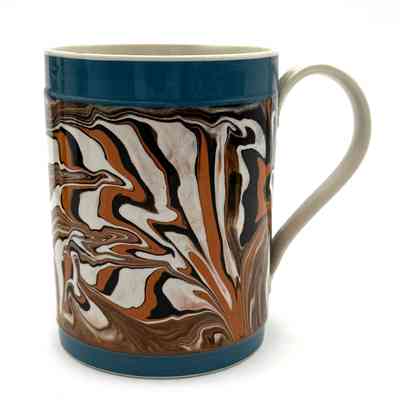
Mochaware Mug
Mochaware mug made by Don Carpentier. Wavy "marbled" pattern in shades of brown/rust/white. Blue band at top and bottom, with white handle.
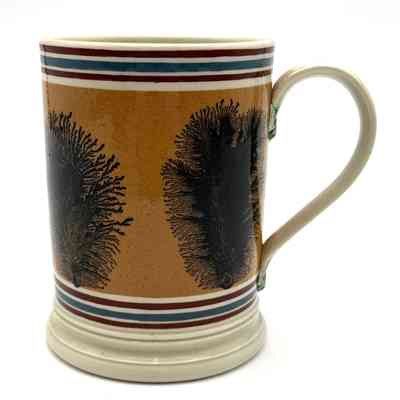
Mochaware Mug
Mochaware mug made by Don Carpentier. White/rust/white/blue/white/rust/white band at top and bottom, which is footed. Four dendritic patterns in black on light brown background. White handle, the ends of which are painted green.
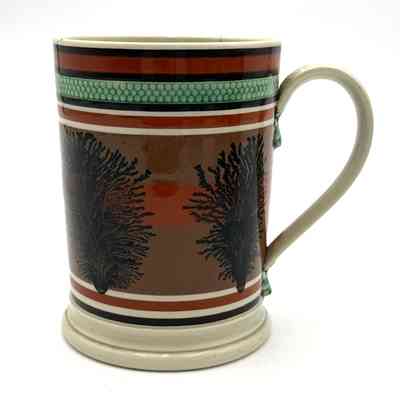
Mochaware Mug
Mochaware mug made by Don Carpentier. White/dark brown/rust/dark brown/green/dark brown/white/rust/white band at top. White/rust/white/dark brown/white band at bottom, which is footed. White base and handle, the ends of which are painted green. Four dendritic patterns in black.
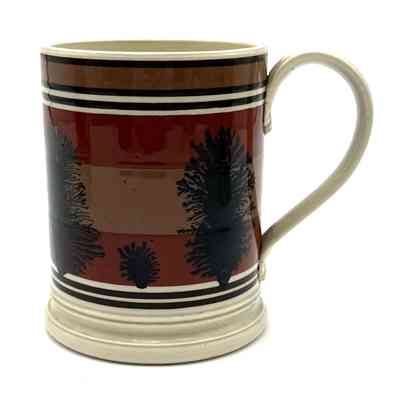
Mochaware Mug
Mochaware mug made by Don Carpentier. White/dark brown/milk chocolate brown/dark brown/white/dark brown/white band at top. Main body of mug is rust/milk chocolate brown and rust with 4 large and 4 small dendritic patterns in black imposed on it. White/dark brown/white/dark brown/white band at bottom, which is footed, and white handle.
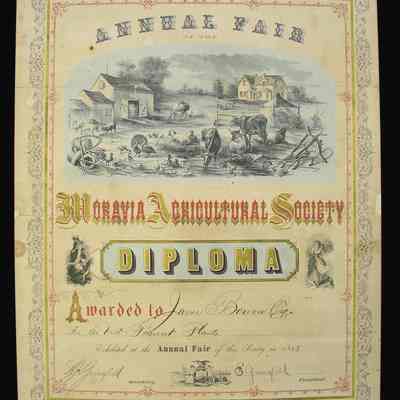
Moravia Agricultural Society Diploma
One printed diploma from the Moravia Agricultural Society. It is printed in purple, pale blue, black, gold, and red. It has blank spaces that have been filled in by hand, awarding James Brown, Esq. this diploma for the best peanut plants in 1885. There is an elaborate engraved image of a farm with cattle, sheep, poultry and various agricultural implements and tools.

Mortar and Pestle
One cast iron mortar and pestle of the type used at home.
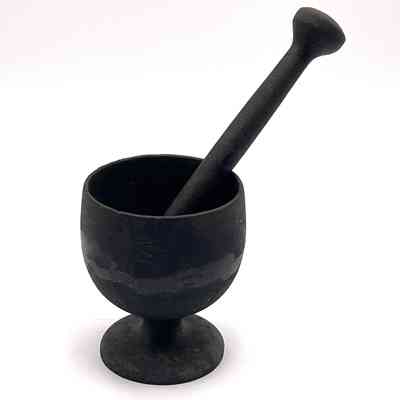
Mortar and Pestle
Footed mortar with wide mouth and base. The stem is so thin that the piece looks like a goblet. Pestle has knobs on each end.
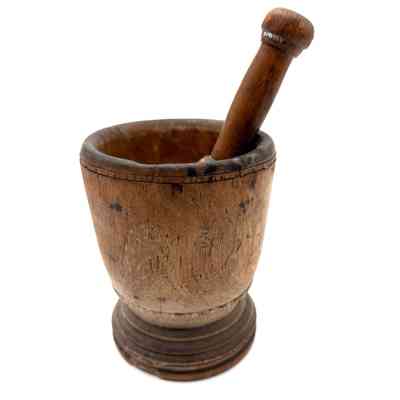
Mortar and Pestle
Footed mortar with turnings on base. Turned handle on pestle.
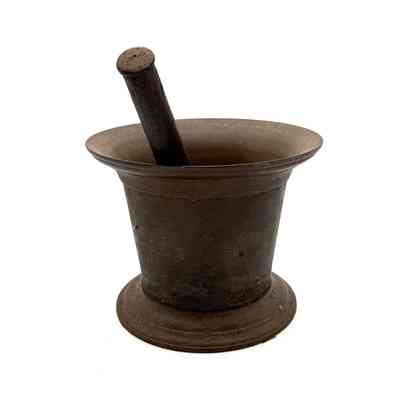
Mortar and Pestle
Cast iron mortar and pestle.
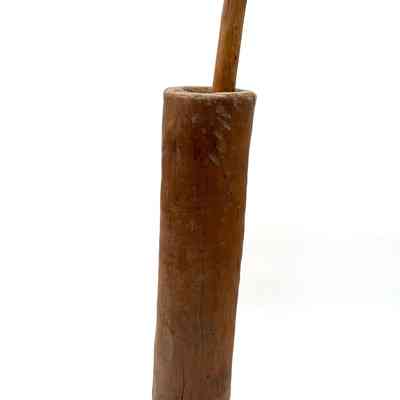
Mortar and Pestle
Mortar is a hollowed out cylinder of wood. Wooden pestle tapers to one end.
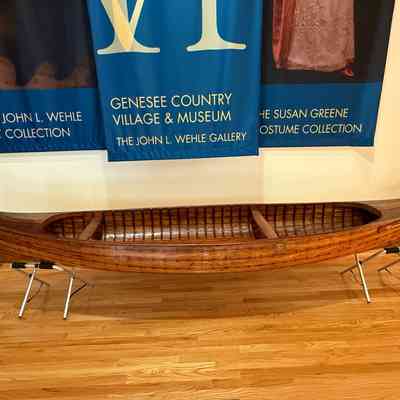
Mortimer Threehouse Canoe
Mortimer Threehouse was a gunsmith who worked in the Harry Harrison Sporting Goods Store on State Street in Rochester. In his spare time in the winter months, from about 1899-1911, he would build canoes. It is estimated that he made around 16-30 canoes. Only 6 are known to still exist. Threehouse was meticulous in his building techniques. It is said he would not be rushed, and the canoes were not declared finished until each tiny detail met with his approval. Occasionally he was commissioned to build a canoe, other times he made them to sell. In a 1911 ad he was offering one for $75. This canoe is made with 6 types of wood. The planking is butternut, the rails are oak, the decks are mahogany with a cherry strip in the center, the ribs are elm, and the floorboards are spruce. This canoe is a little under 12 feet but some of the canoes reached 16 feet and were made of up to 13 types of wood. Threehouse made name plaques for his canoes and christened them with names that are Indigenous in origin. Two that we know of are the Wampoose and the Owana. When this canoe was discovered the name on the plaque had been worn away so it was christened Naomi after the owner’s mother.

Mourning Lithograph
Lithograph. Hand colored with three small children dressed in black, mourning over an urn-topped tomb with weeping willow tree, river and small church in the background. Mahogany-veneered pine frame. Concave.

Mourning Lithograph
Hand-colored with woman crying over a tomb topped with three angels. Gothic church and weeping willow in the back-ground. Pine frame with concave molding and beading on outer edge.
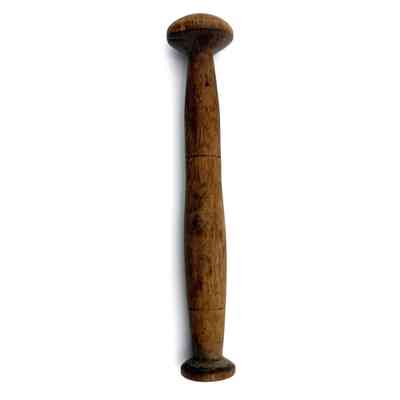
Muddler
Turned mixing stick.
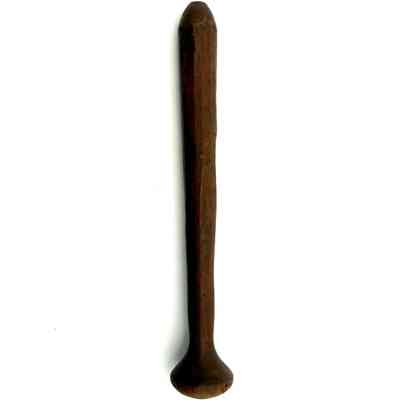
Muddler
Turned mixing stick.
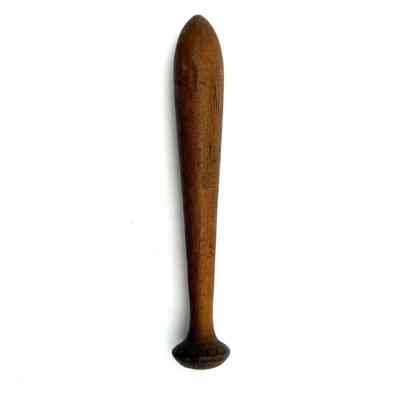
Muddler
Turned mixing stick.
Muddler
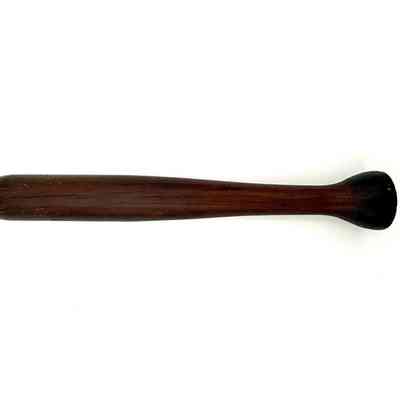
One wooden muddle with a long, turned handle and a flat working end.
Muddler
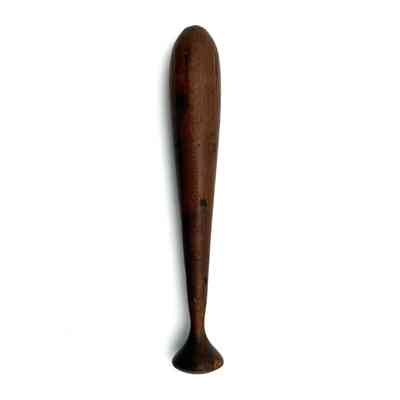
Turned mixing stick. Double-headed

Muff Box
Black pasteboard box bound in red paper used to store a muff. Original label on top.

Muffin Pan
Cast iron muffin pan. Twelve rectangular cups in three rows, cups are very low sided. Ends have "T" shaped metal to act as a handle. One end has a raised "P" on the 'handle,' the other has "Patent April [?]".

Muffin Pan
Cast iron muffin pan. Twelve rectangular cups in three rows, cups are very low sided. Ends have "T" shaped metal to act as a handle.

Muffin Pan
Cast iron muffin pan. Twelve rectangular cups in three rows, cups are very low sided. Ends have "T" shaped metal to act as a handle.

Muffin Pan
Cast iron muffin pan. Twelve rectangular cups in three rows, cups are very low sided. Ends have "T" shaped metal to act as a handle.

Muffin Pan
Cast iron muffin pan. Twelve rectangular cups in three rows, cups are very low sided. Ends have "T" shaped metal to act as a handle.

Muffin Pan
Muffin Pan. Seven cups, four of which are footed and joined with a handle at one end. The handle has a hole for hanging.

Muffin Pan
Muffin Pan. Twelve round cups joined and with a handle at each end. Marks on handles are not readable.

Muffin Pan
One cast iron muffin pan with the capacity for twelve cylinder shaped muffins in two rows that are separated by cut outs. At each end are handles with a round hole in them for hanging storage.

Muffin Pan
One cast iron muffin pan with cylinder shaped cups in two joined rows. At each end is a handle.

Muffin Pan
One cast iron muffin pan with eleven oval cups in three rows of four, three, and four. The middle row also has T-shaped iron handles, one of which has an "8" molded to the back of one handle.

Muffin Pan
Muffin pan with 3 rows of 3 holes each carved from one piece of soap stone. Base is 6-3/8" square. The rimmed top is 8-3/4" square.

Muffin Pan
Muffin pan divided into eight rectangular units.

Muffin Pan
Muffin pan divided into eight oval units. The back is imprinted with the number 4.

Mug
Deep pink background decorated with bands of Roman hunters in togas / dogs / deer. Egg and dart borders. Gilt striping.