

Music Box
Object/Artifact
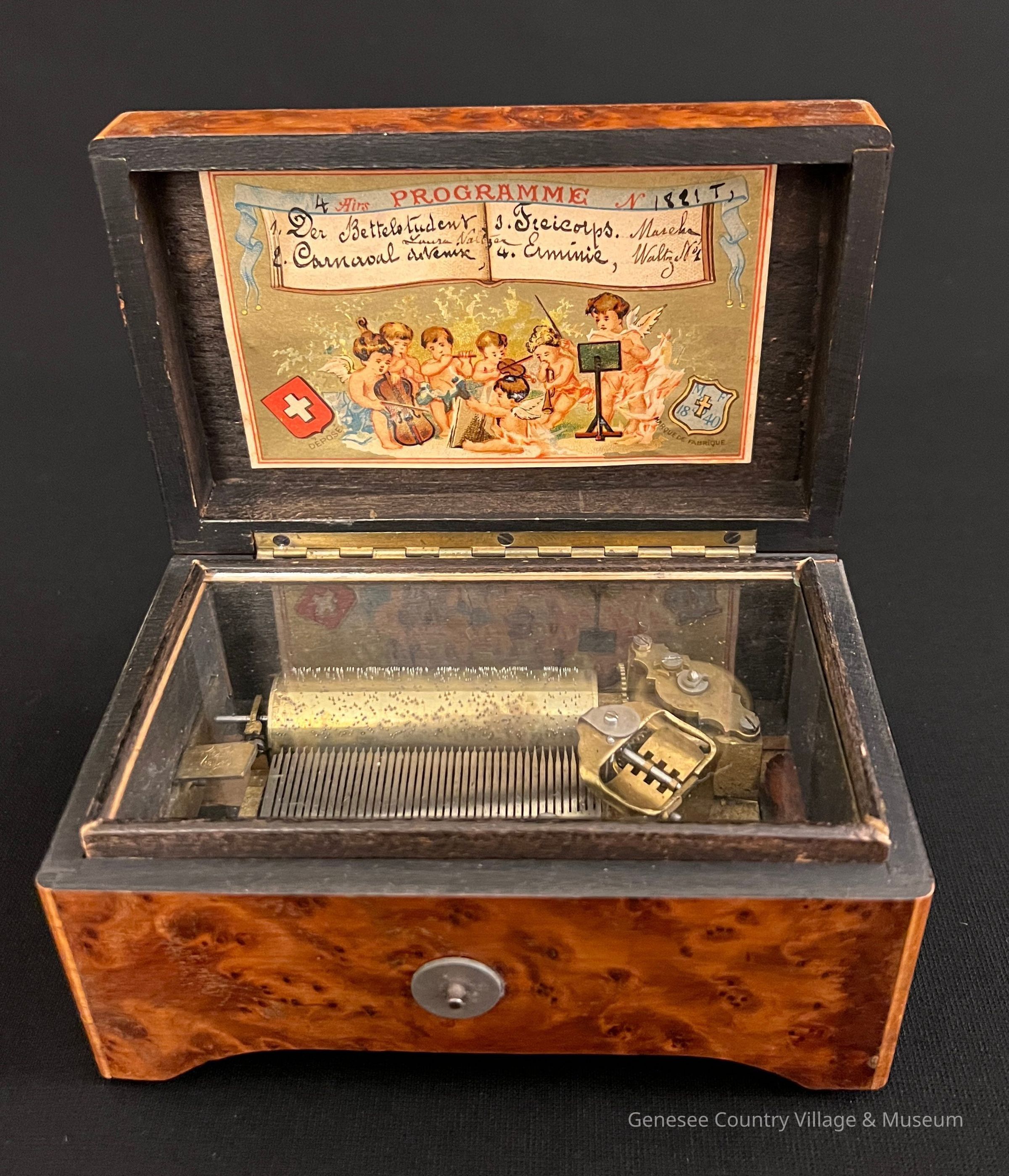
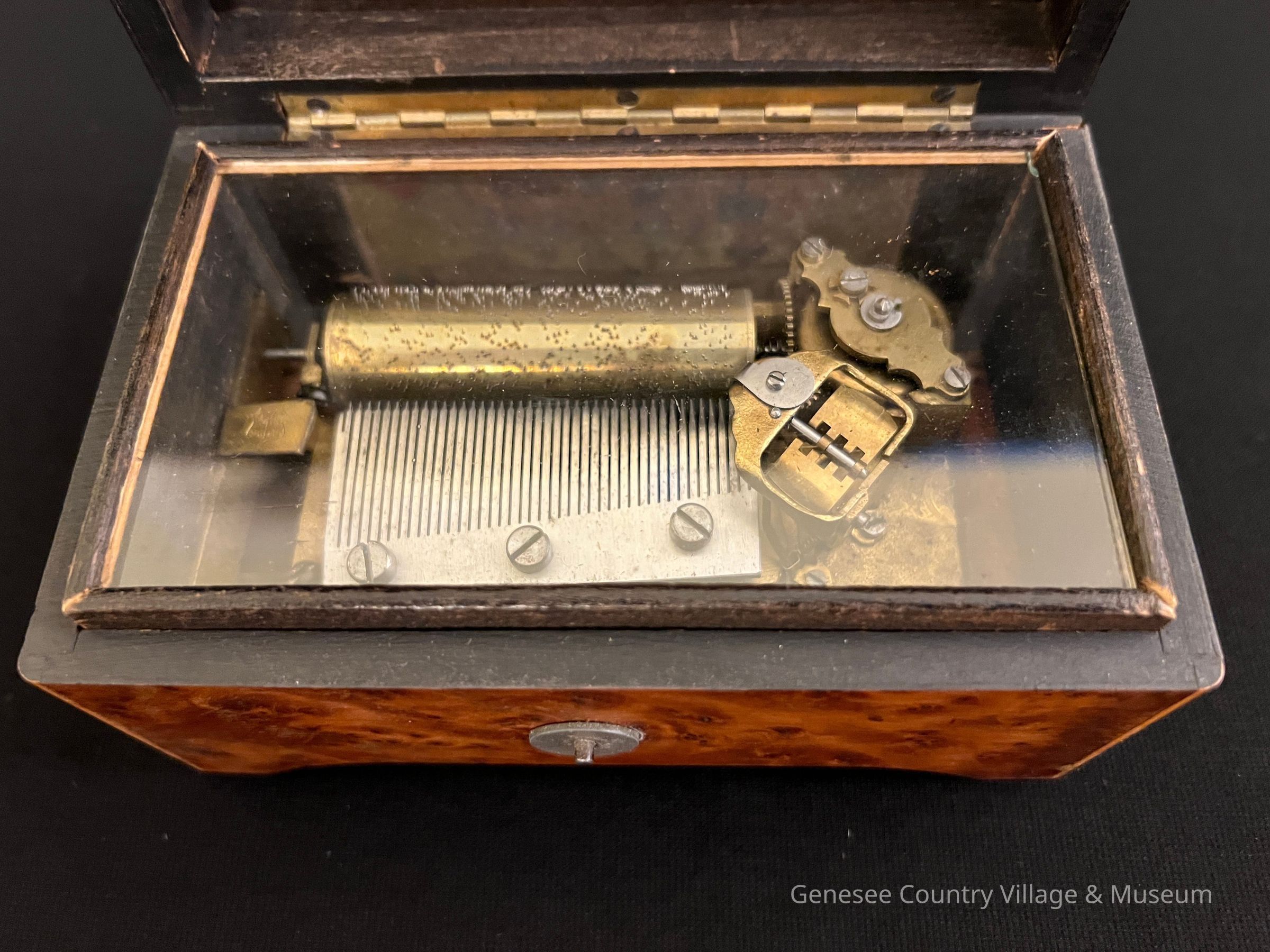
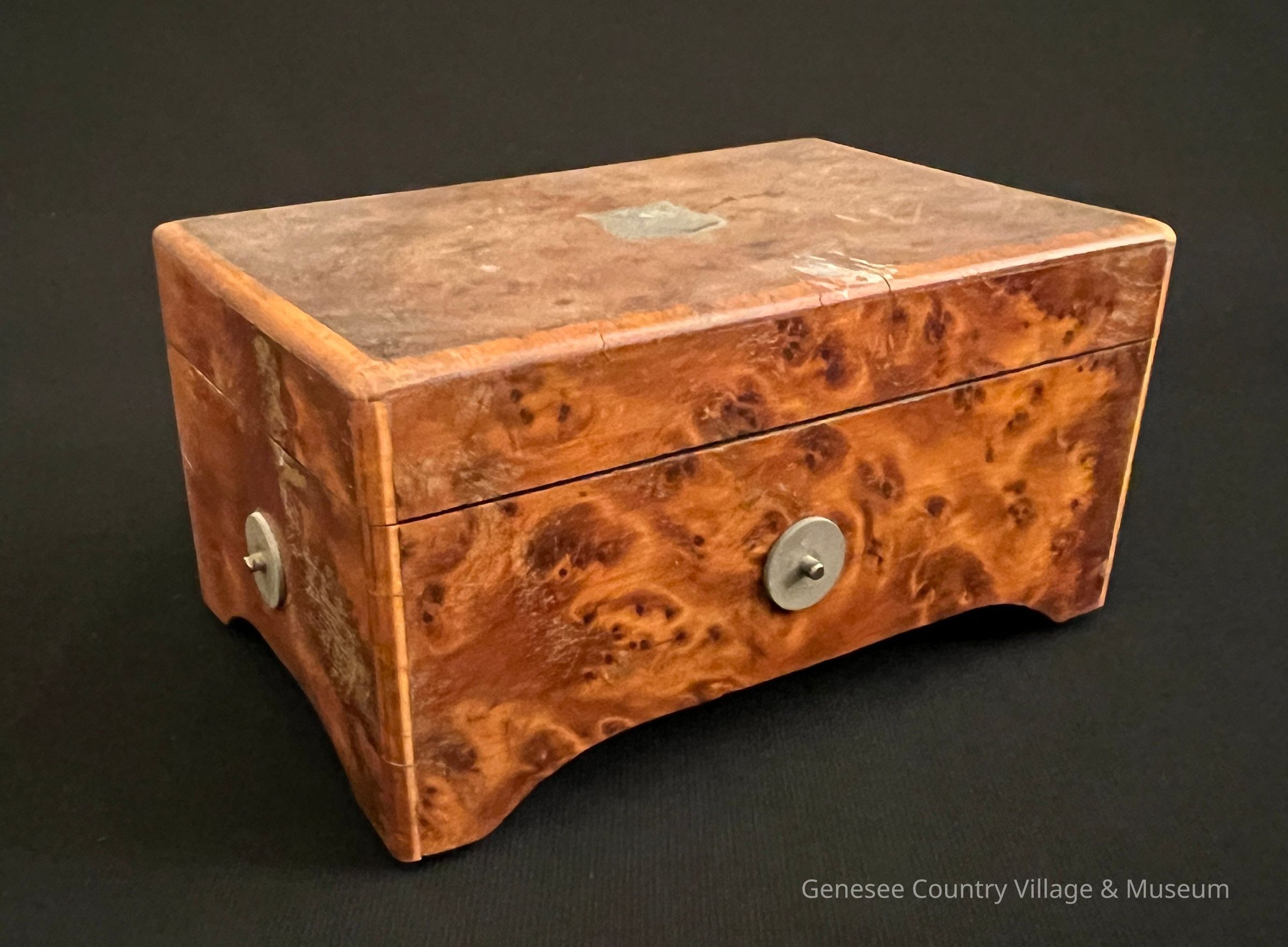
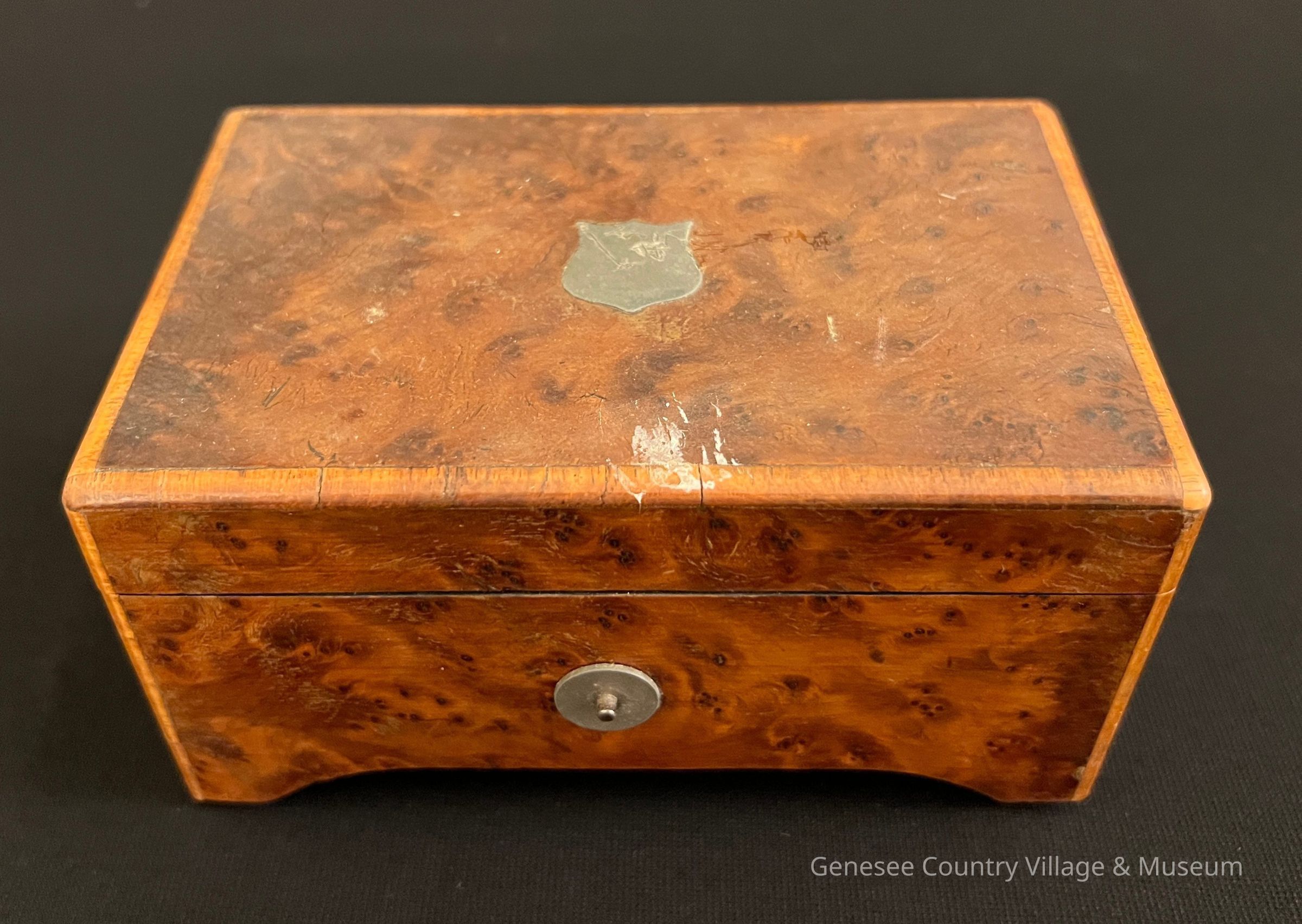
Small Swiss music box, rectangular in shape, with burl-wood veneer and satinwood edging with a hinged lid. The lower half of each side has an arch to create "feet", each of which has a round metal stud underneath. The front and side have small pewter discs, one is most likely for winding and the other for starting and stopping the music. Glass encloses the inside top where the mechanics can be viewed. A label is affixed to the inner part of the lid. Label: "4 Airs Programme N 1881 T,". Four song titles are written in ink. 1. In German "Der Bettelstudent" (The Beggar Student), 2. In French "Carnaval de Venise" (Carnaval of Venice), 3. In German "Freicorps, March" and 4. In German, "Erminie", Waltz No 1. Gold label features cupids playing music, two shields, one red with white cross, one pale blue with gold cross and shield border.
1997.5.241
Is a music box a musical Instrument? Some would say yes, others no. For the purpose of this exhibit we are considering it an automatic musical instrument as it is a beautiful little music box we would like to share. Small at approximately 3" x 5" x 2", the mechanics consist of a revolving cylinder studded with tiny pins. As it rotates the pins pluck a metal comb, each tine of which is tuned to a different pitch. It is usually wound with a key or other type of turner. This music box features a glass top so as the gears move and the cylinder rotates one can view it plucking the tines. Some music boxes of the era had a metal record that could be changed out for different songs. The pins were on the record and as it spun it plucked the tines of a comb set above or beneath it.
Genesee Country Village and Museum
circa 1881
Switzerland
Central Europe
Europe
2-9/16 in
5-1/4 in
3-3/8 in
Wood
Metal
Glass
Paper