

Hammered Dulcimer
Object/Artifact
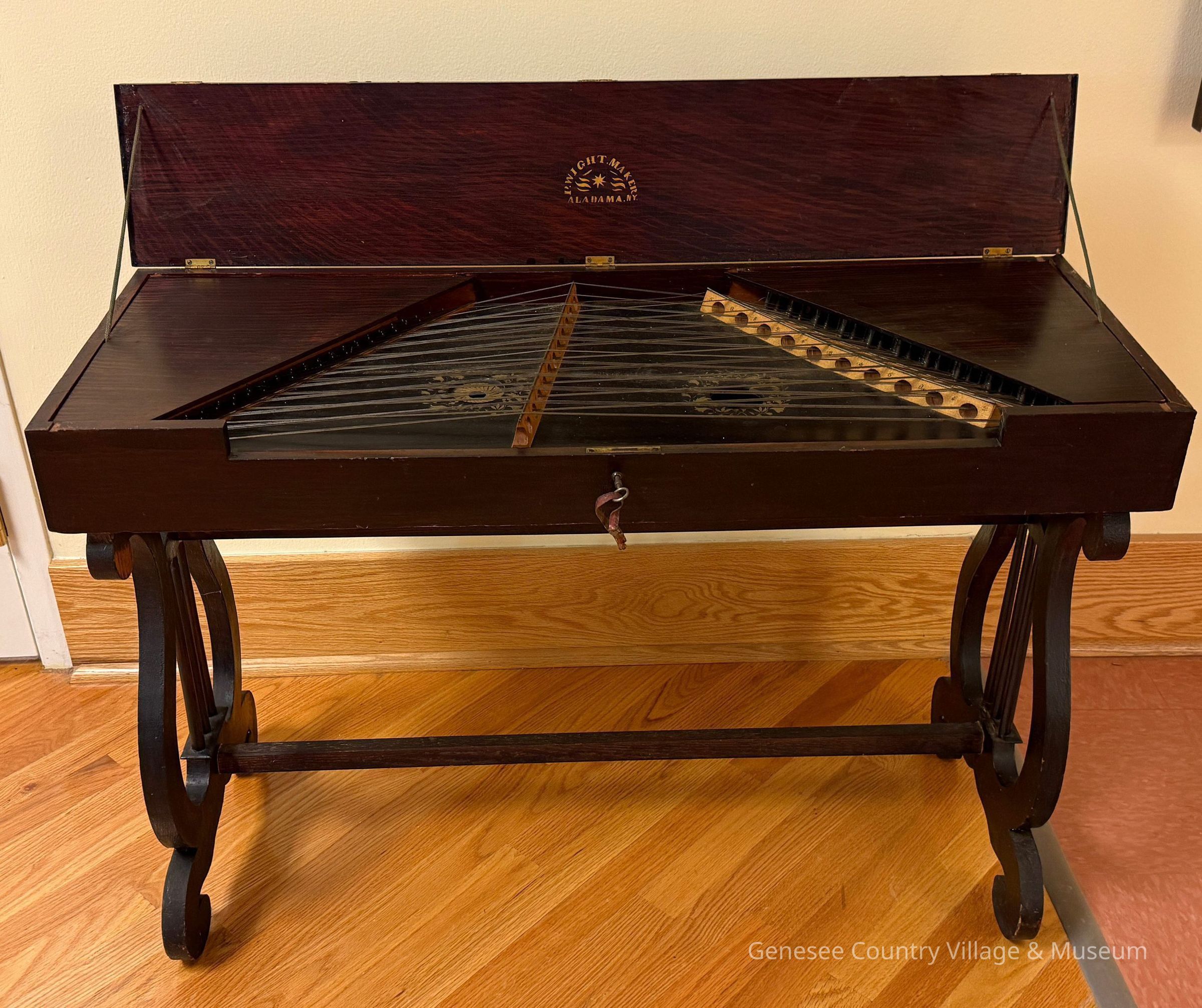
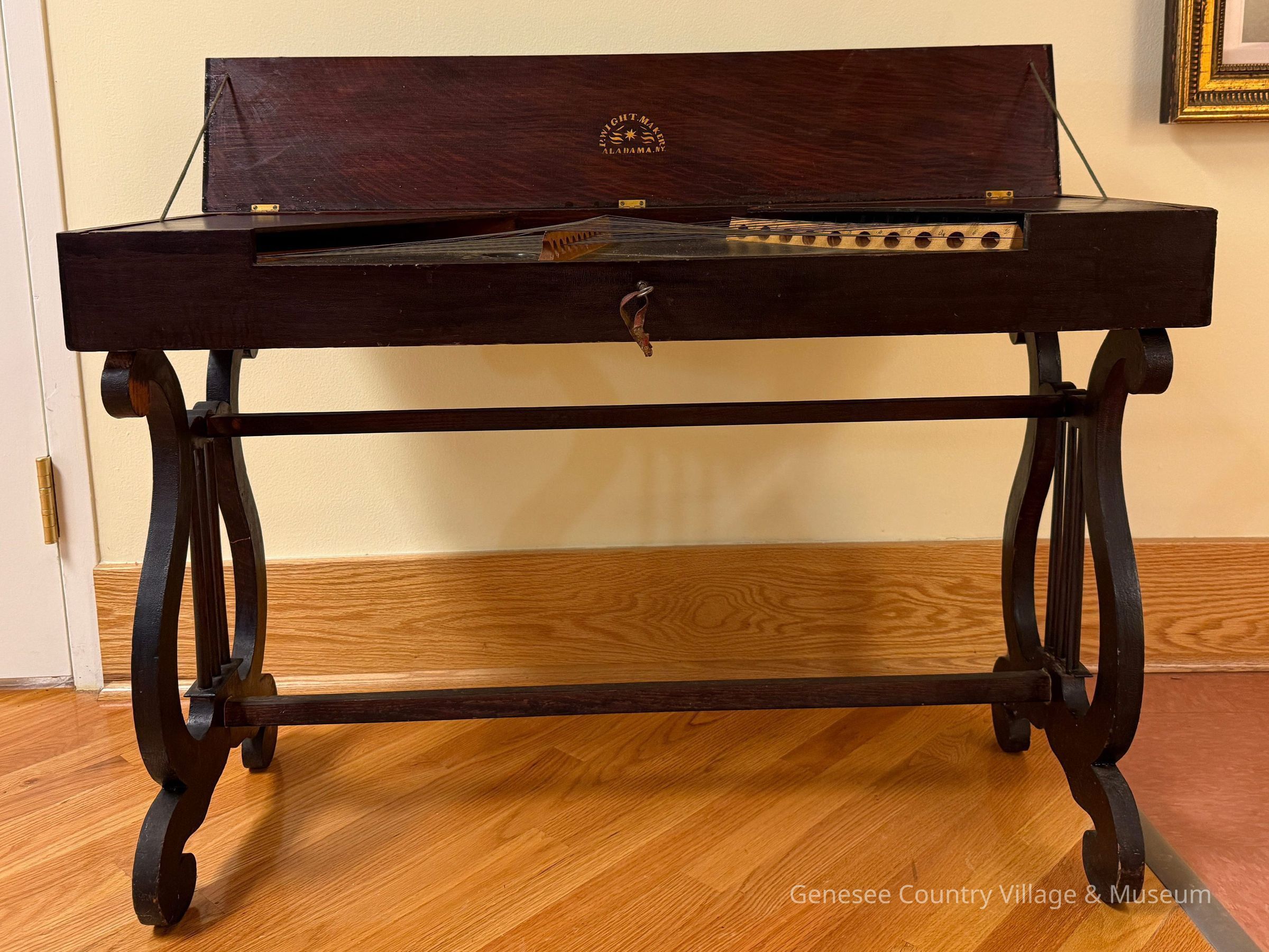
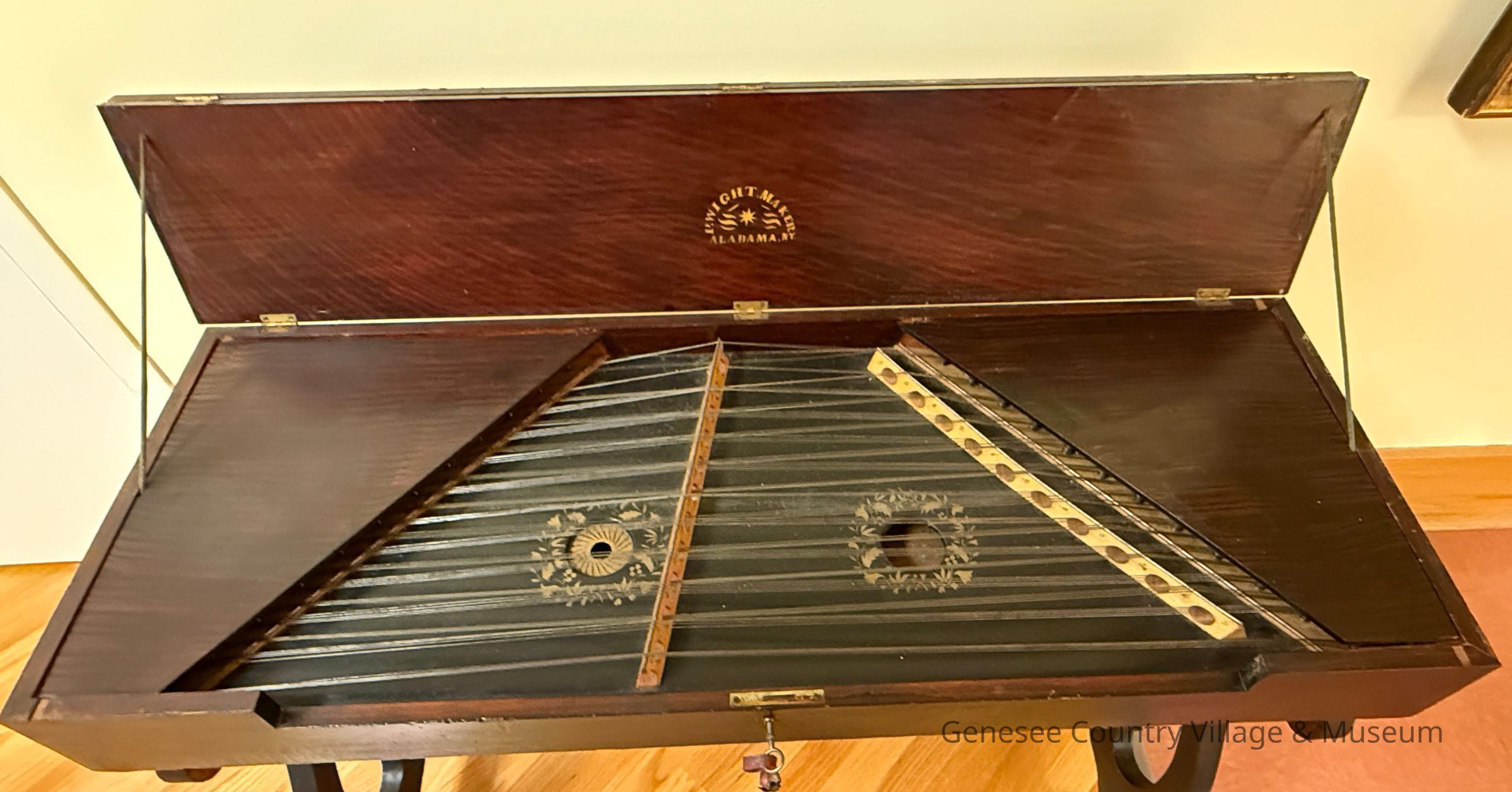
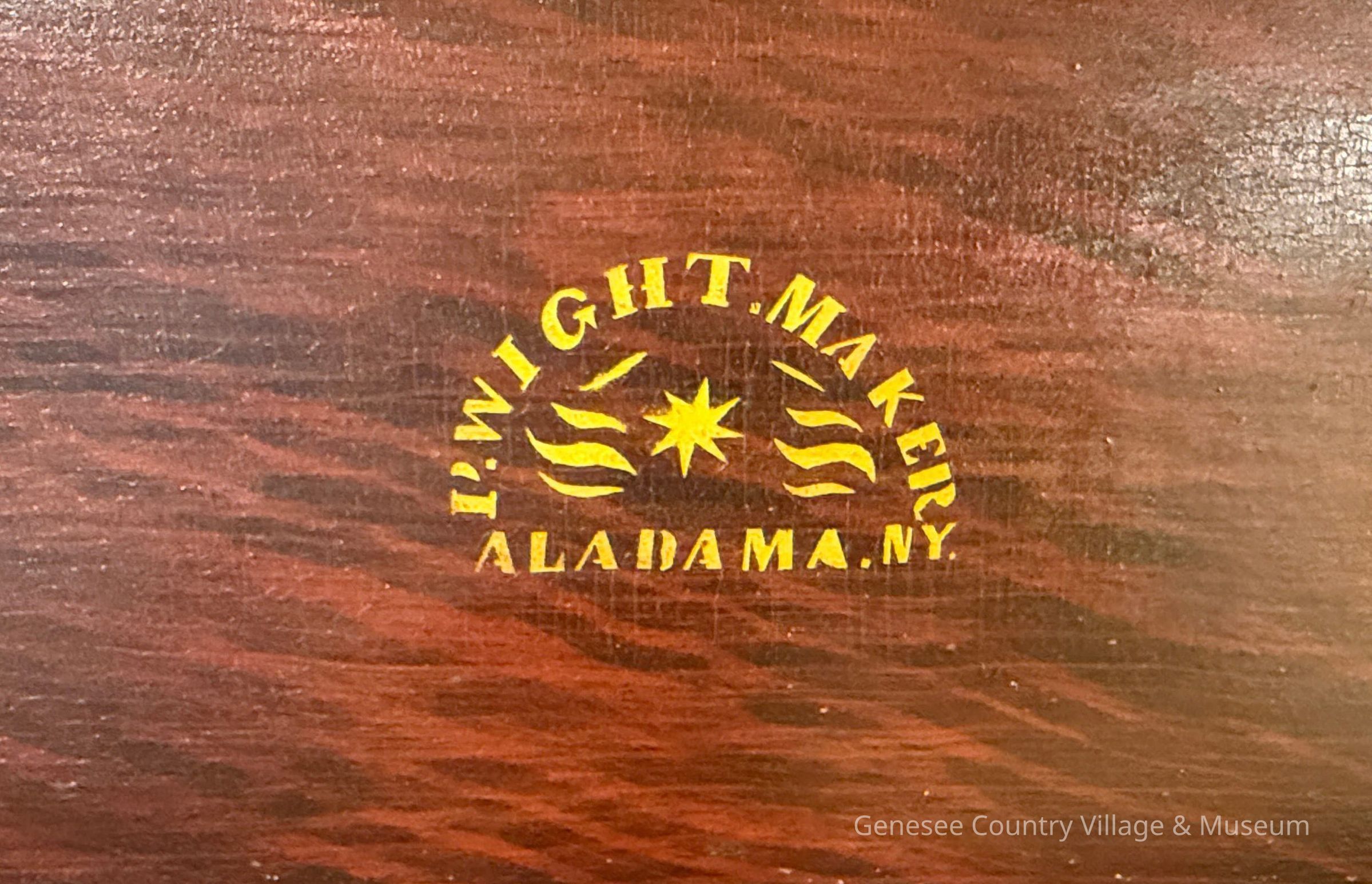
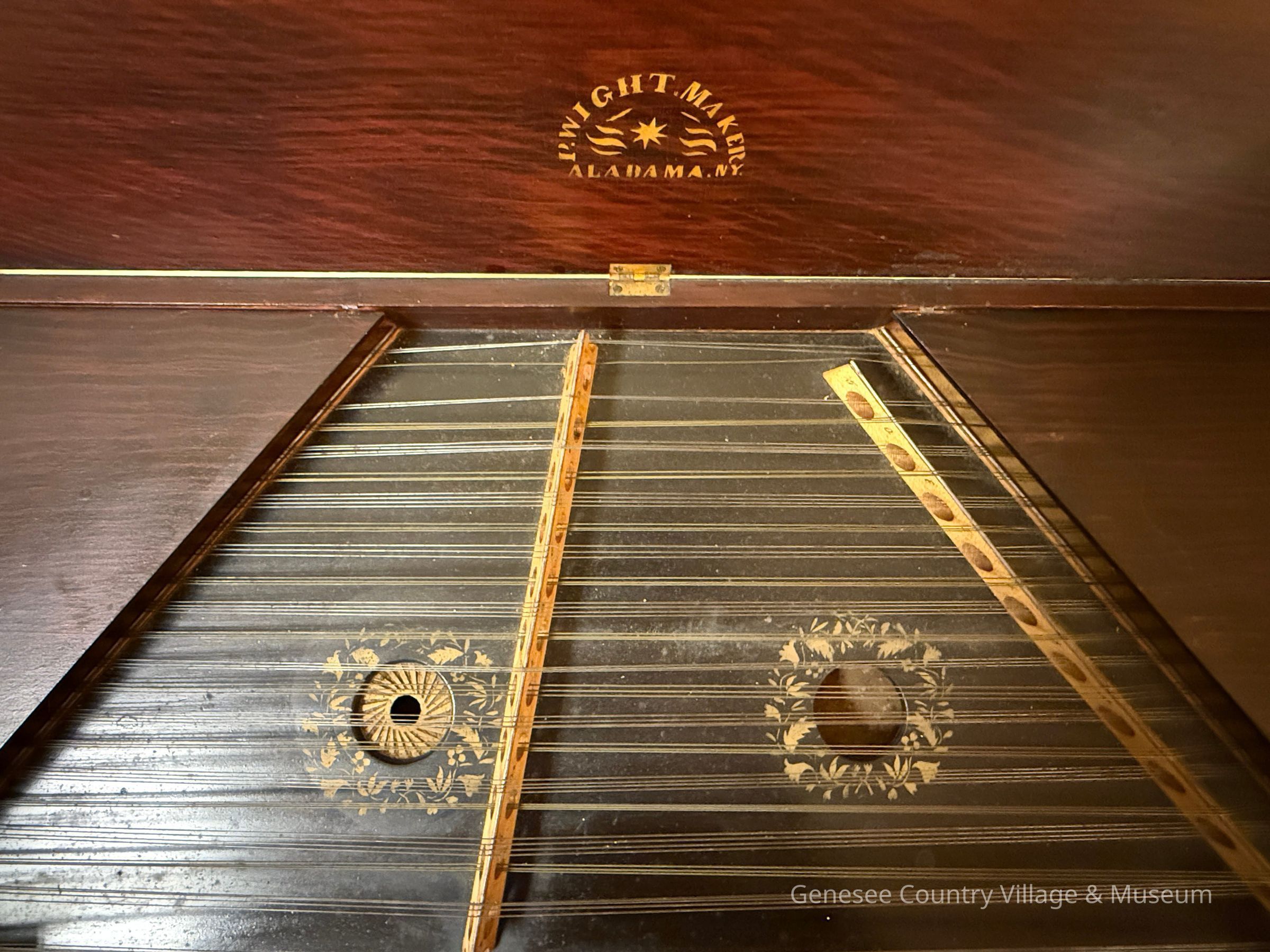
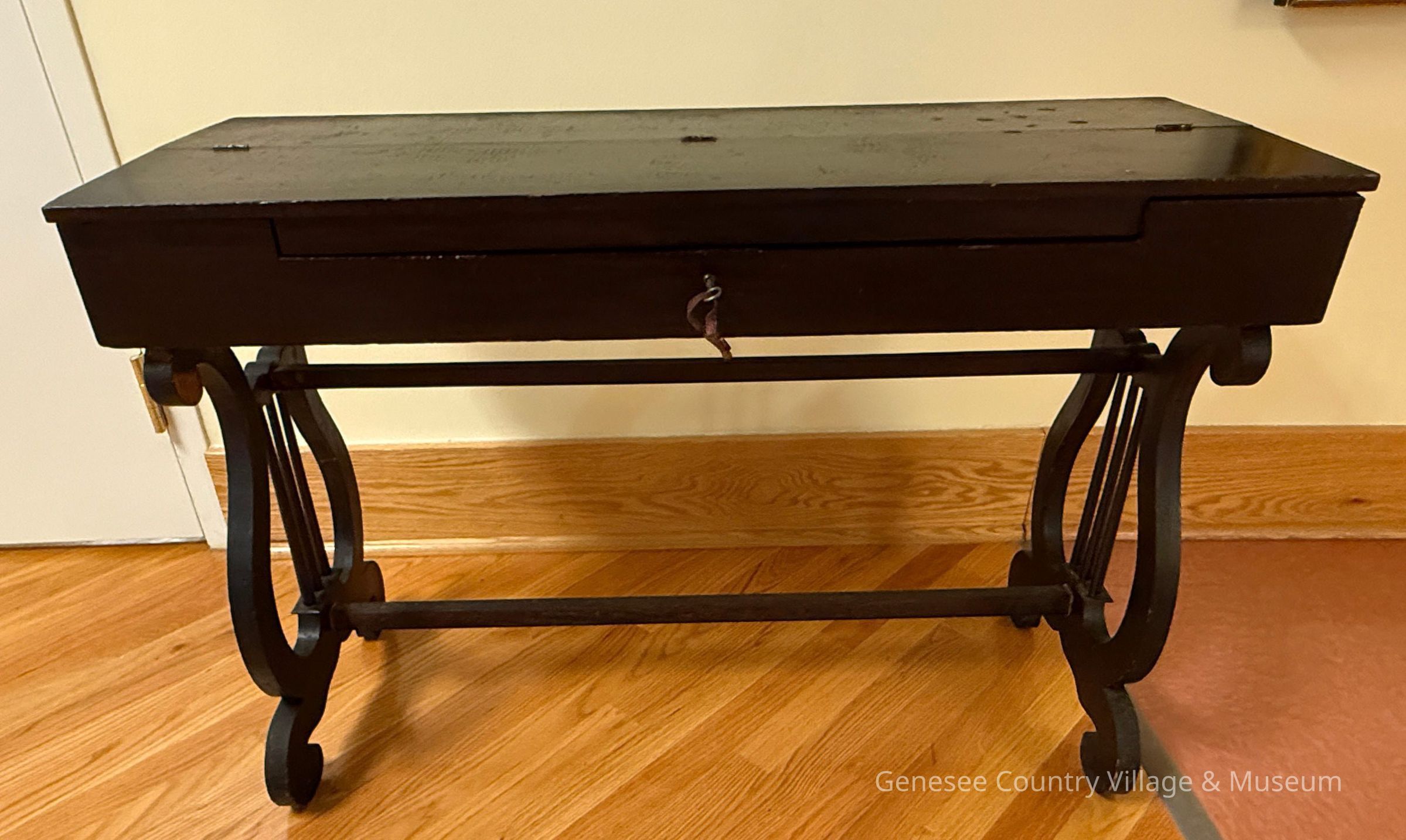
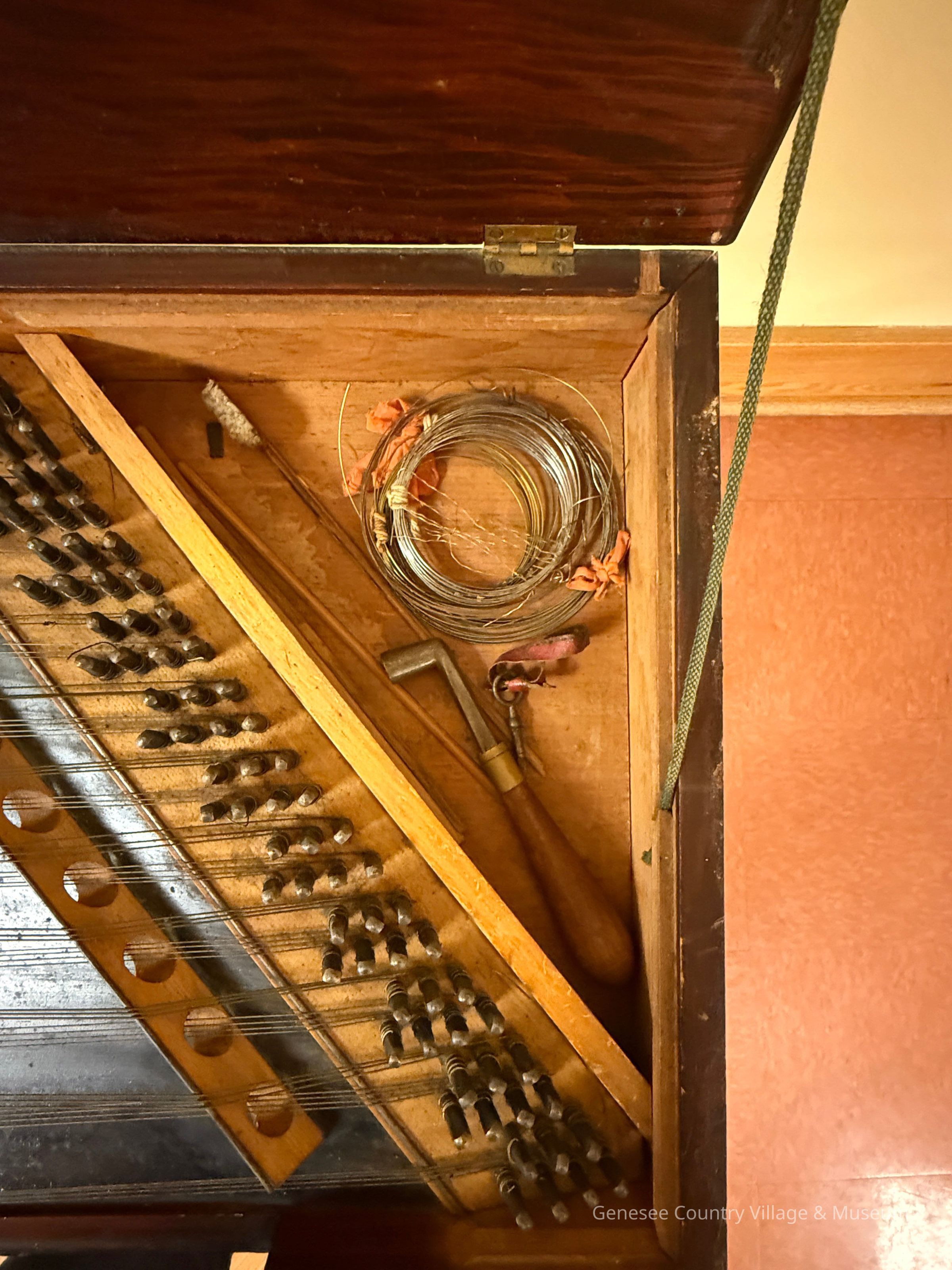
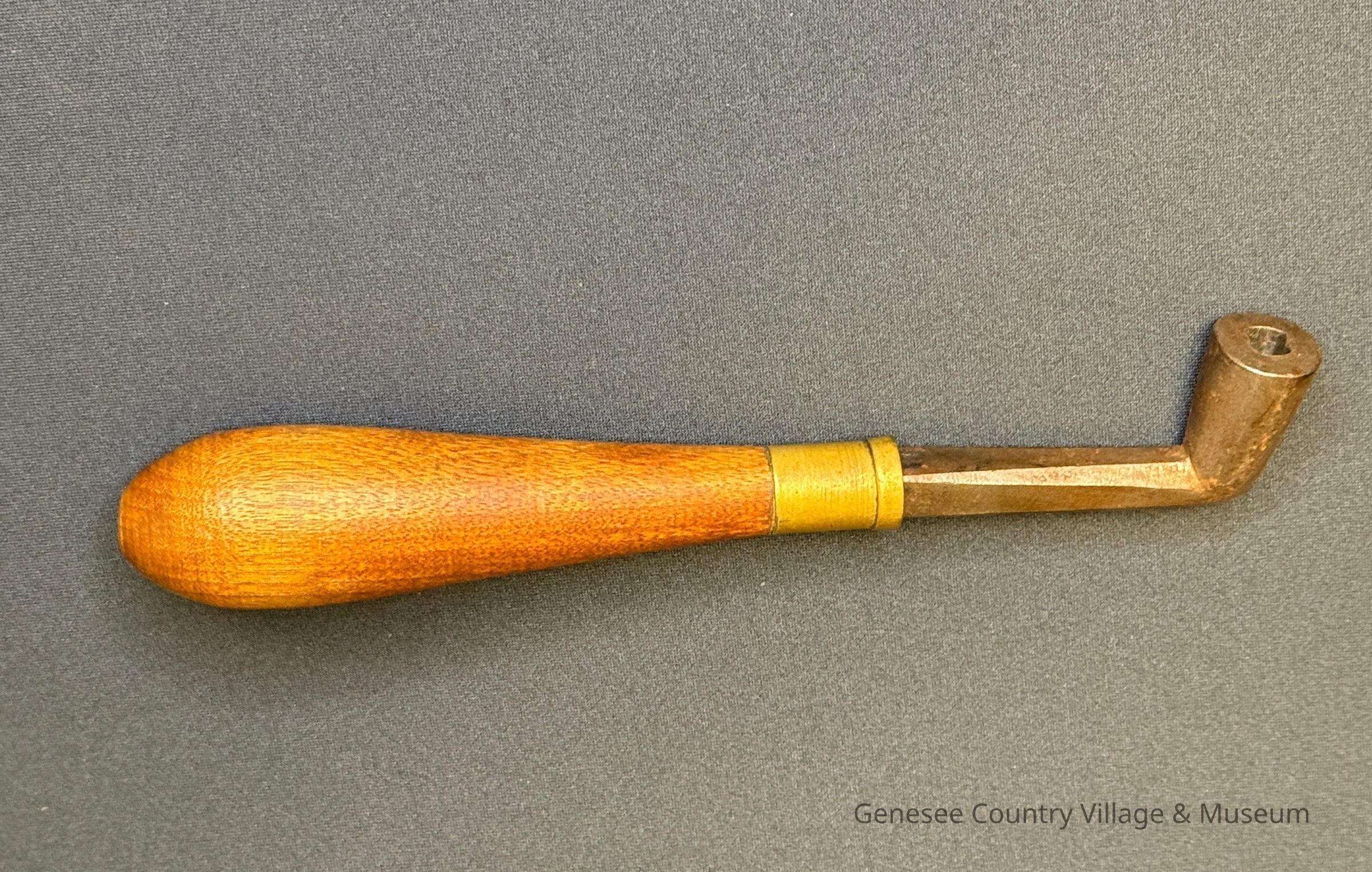
One hammered dulcimer, sometimes called a hammer dulcimer, set into a lidded case, with a craved wooden stand. The case has a hinged top with two cords on each side to keep it propped open. Two triangular panels on each side of the top can be removed to gain access to the pegs and storage compartments. On the right side there are 12 sets of 4 raised iron pegs alternating with 11 sets of 3 iron pegs, which have wire stings that are attached to small raised studs on the other side. There is a black painted sounding board with two circular resonator holes, both of which have a gold floral motif painted around them. One has a gold wooden insert with a spiral pattern carved into it. One bridge, pierced with circular holes, is situated to the left of center, and another is on the far right. The following words are stenciled in gold on the underside of lid: “P. Wight, Maker / Alabama, NY ". Includes 1 hammer, one tuner, and 1 key along with extra strings.
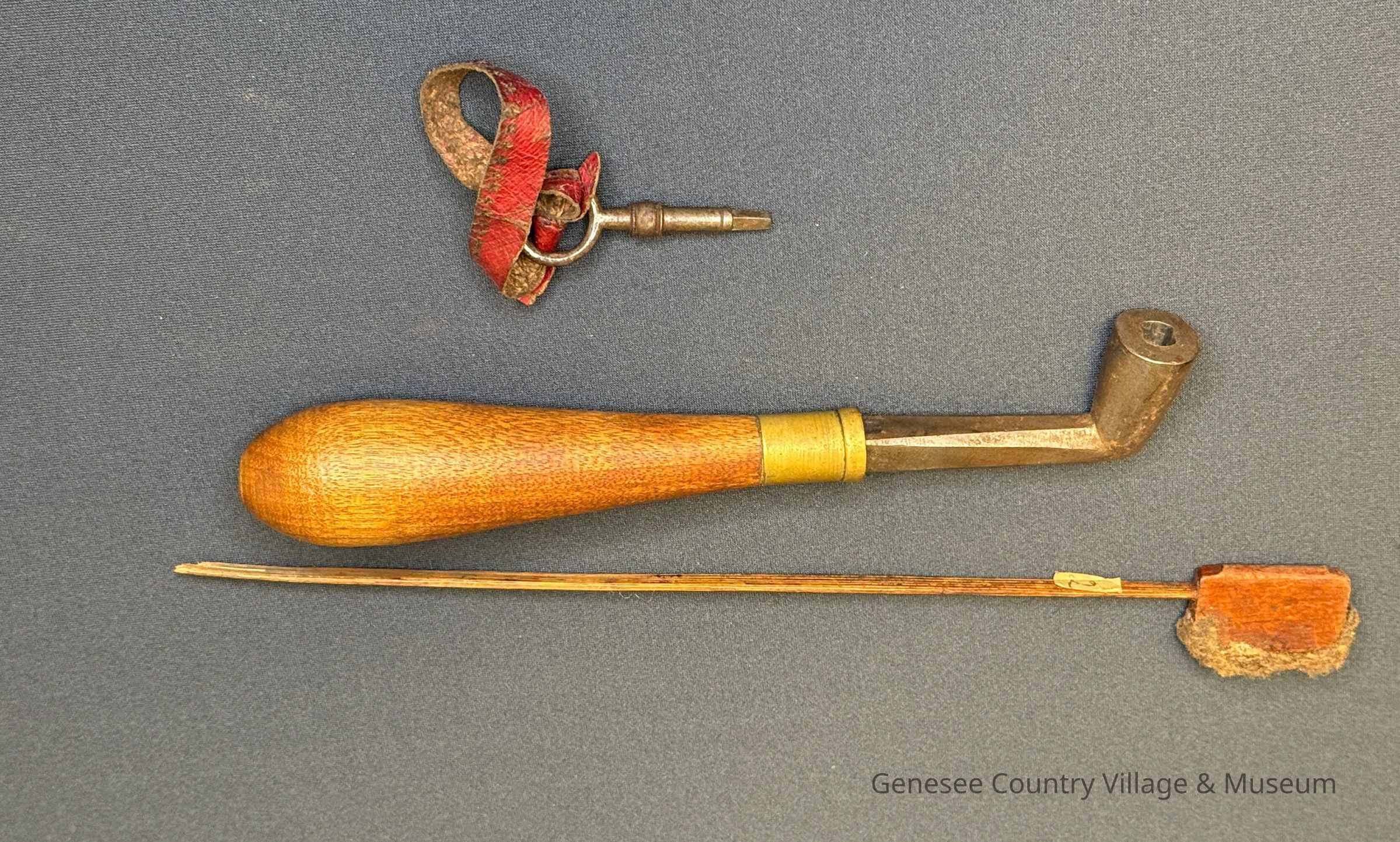
2025.05.001.a-g
The hammered dulcimer is a percussion stringed instrument that is an ancient ancestor of the piano. Its history dates to at least the early 18th century in America. Strings are stretched across a trapezoid shaped hollow resonant sounding board. Bridges are placed to create a treble side and a bass side. Occasionally a dulcimer will have only one bridge and at other times a third small bridge is added to create more low notes. Small “hammers’ are used to strike the strings. The instrument can be placed in the lap or on a stand. Several dulcimer makers thrived in Western New York in the 1850’s and 60’s. This dulcimer was made by Perry Wight (1831-1862) of Alabama, New York. It is one of three made by him in the GCV&M collection.
Genesee Country Village and Museum
Perry Wight
1852 - 1862
Alabama
New York
United States of America
North America
Makers Mark
Inside lid
P. Wight / Alabama, NY. Inside the words is a star with "rays" coming out of it like a sun.
English
Stencilled
P. Wight
Dulcimer
4 in
39-1/4 in
14-1/4 in
Stand is 22 1/2 in H x 37 in W x 15 1/2 in L
7
1 dulcimer (a), 1 stand(b), 2 removeable storage lids (c,d), 1 hammer (e), 1 tuner (f), 1 key (g)
Extra wire
Wood
Metal
P. Wight
Perry Wight
Alabama
New York
United States of America
North America